What is professional standards software for fire departments?
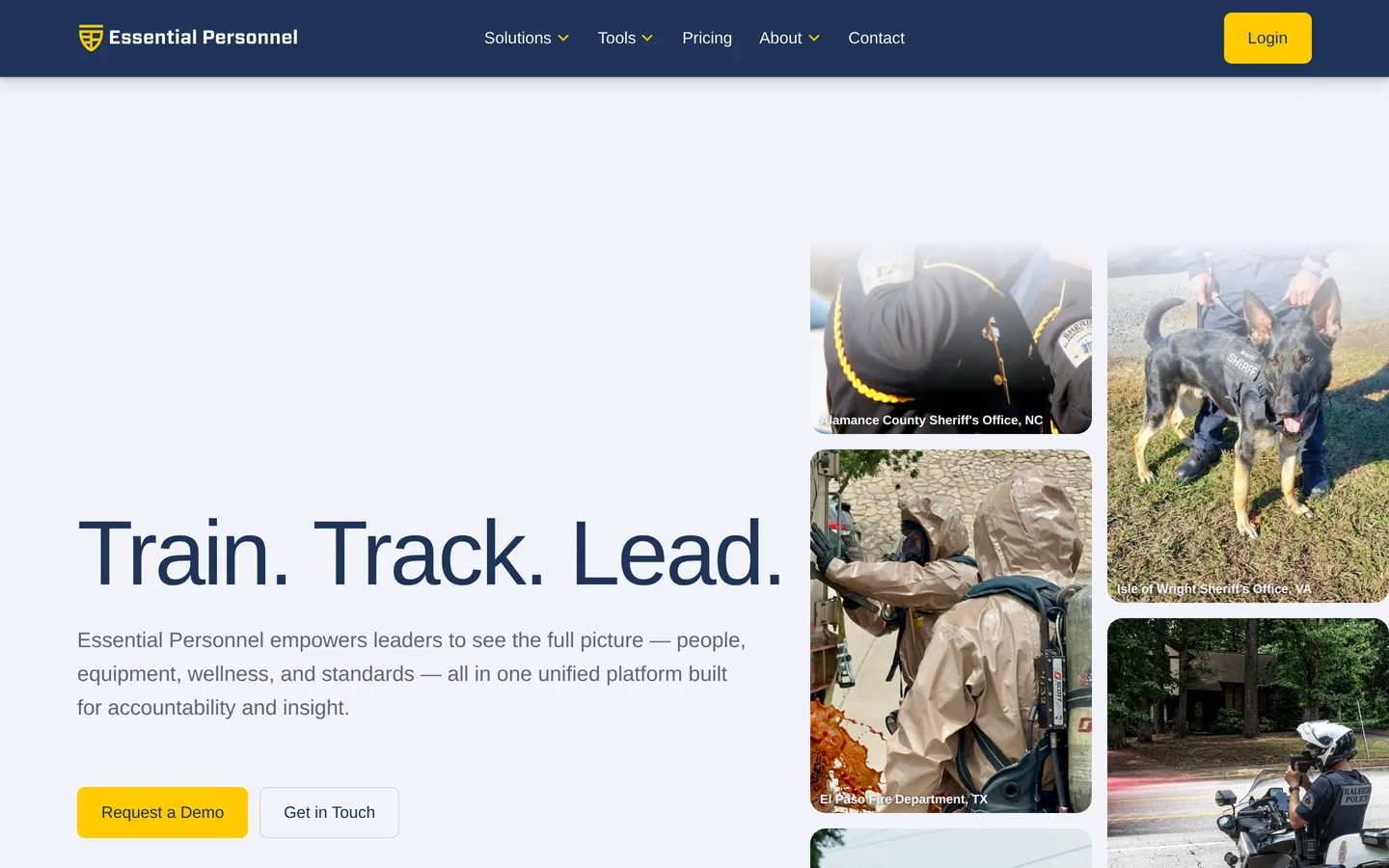
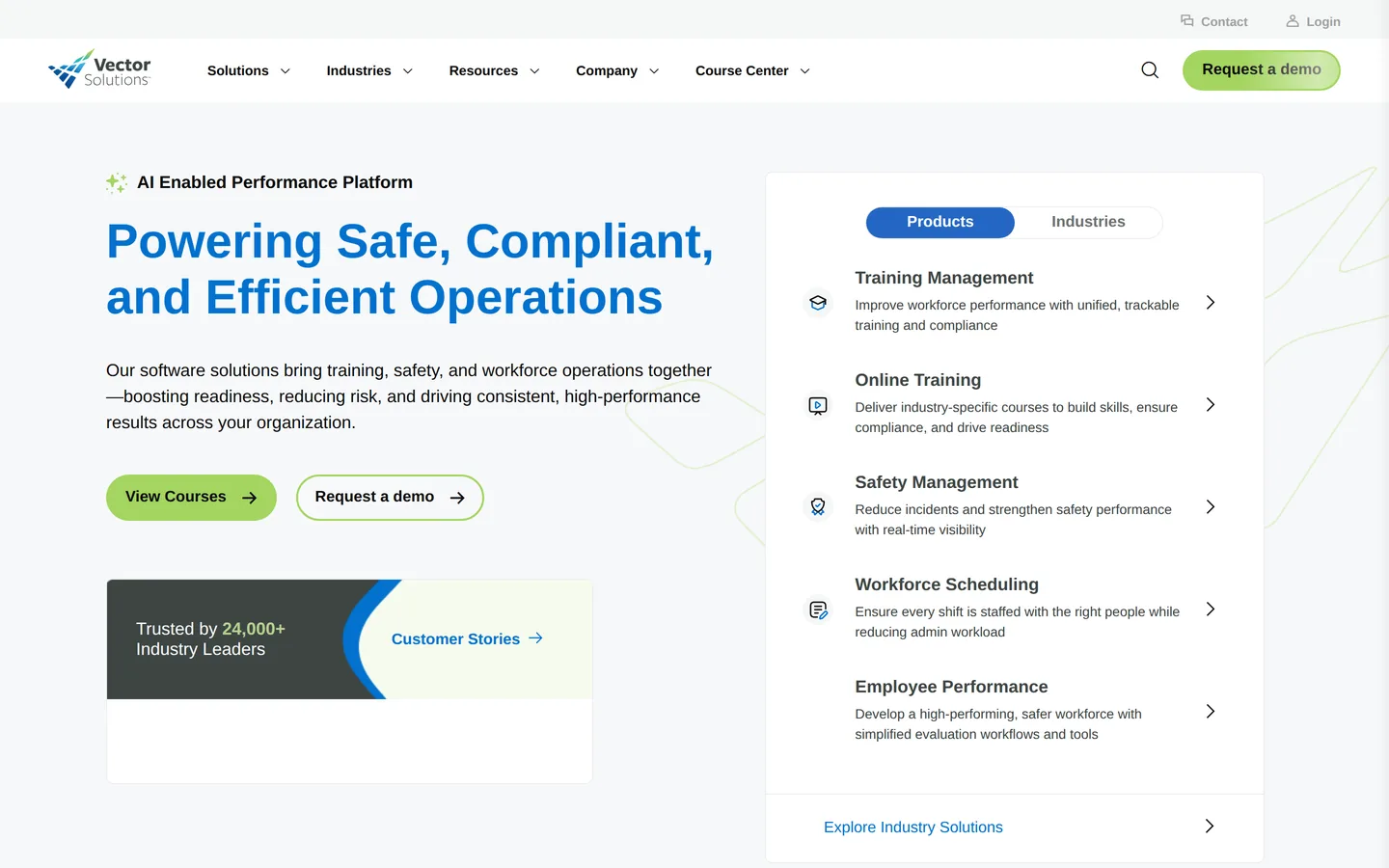
Professional standards software for fire departments is the system of record for how the department proves its people are trained, current and accountable. It holds training hours, certifications, qualifications and task books, evaluations and coaching entries, policy acknowledgements and case files against each member, so the department can produce the evidence an ISO field representative or a CFAI peer assessment team asks for. Essential Personnel, PowerDMS by NEOGOV and Vector Solutions all sell into this category, and they solve different halves of it.
The category exists because the fire service is measured from outside more often than most public agencies, and it's measured on documents. An insurance rating, an accreditation award, a state fire marshal filing and an occupational claim all resolve to the same question: can you produce the record, made at the time, by a named person. Professional standards software is what turns that from a project into a query.
It isn't a course library and it isn't a records management system. A learning management system delivers training and tracks completion of the courses it delivers. A fire RMS holds incidents, apparatus and inspections. Professional standards software holds the person, and the point of it is that one screen shows everything about one member. Essential Personnel set out that distinction on their own fire and EMS page. If a system can't do that, it's a module rather than a system of record.
The practical test at a demo is to ask for one report: every member whose certification lapses in the next ninety days, with the source document attached. Departments that can answer that in a click can usually answer an assessor too. Departments that can't are the ones assembling a submission from scratch every year.
How fire department accreditation actually works
Fire department accreditation runs through the Center for Public Safety Excellence, whose Commission on Fire Accreditation International awards it against a model of agency self-assessment rather than a set of standards. The current Fire and Emergency Services Self-Assessment Model, the 11th Edition, carries 250 individual performance indicators across eleven categories. As of 2026 there are 334 accredited agencies worldwide, protecting 14 percent of the US population and 17 percent of the Canadian population.
The distinction that trips up most first-time applicants is that CFAI doesn't tell you what good looks like. They publish the model, you describe and appraise your own organization against all 250 indicators, and a peer team of trained fire service professionals comes to verify and validate what you wrote. Where the appraisal finds a gap, you write a plan for improvement. Every performance measurement has to be supported with current reference material, and that reference material is your records.
Before a department can even declare candidacy it needs three completed documents: a Community Risk Assessment and Standards of Cover, a Community-Driven Strategic Plan, and the Self-Assessment Manual itself. CPSE's own guidance is that most agencies take two to three years to implement the processes peer review requires. The model is also explicitly blind to staffing type, so a volunteer or combination department is assessed on the same indicators as a career one, which is worth knowing before anybody assumes it doesn't apply.
What CFAI accreditation asks a department to produce
Across the eleven categories, the ones that live or die on personnel data are the human resources and the training and competency categories. Those indicators want the department's own numbers: how many members hold each credential, how those credentials are verified and kept current, how training is planned against identified risk, how competency is measured, and how the department knows any of it happened. CFAI accreditation doesn't accept an assertion here. It wants the appraisal, and the appraisal wants the record behind it.
That's the work professional standards software either removes or doesn't. A department running certifications, qualifications, task books, evaluations and training hours on one member record can appraise those indicators from live data. A department running them across four systems and a shared drive spends the applicant window reconstructing them, and then does it again for every annual report after the award.
CPSE accreditation and the annual compliance report
CPSE accreditation is valid for five years, and it isn't a one-time exercise. Each accredited agency has to submit an Annual Compliance Report every year, along with a fifth of the current applicant fee, and at the five year mark the agency returns to applicant status and goes through peer review again. So the reporting burden is annual and permanent, not a push before a hearing.
That changes what a department should buy. A tool that helps you assemble one submission is worth far less than a record that makes the next four annual reports fall out of daily work, because the department will be doing this every year for as long as it stays accredited. It's the same argument for keeping records properly the first time, and it's the reason the criteria below weight live data over document assembly.
What a fire department ISO rating credits
A fire department ISO rating is a Public Protection Classification from 1 to 10, developed by Verisk's Insurance Services Office using the Fire Suppression Rating Schedule and used to set property insurance premiums. The schedule scores a community out of 105.5 points: 10 for emergency communications, 50 for the fire department, 40 for water supply and 5.5 for community risk reduction. Nine of the fire department's 50 points are training, and every one of them depends on documentation.
Departments treat a fire department ISO rating as a fixed fact about hydrants and staffing, and to a large extent it is. But the part a department can move fastest, without buying an engine or laying a main, is the part that's already happening and isn't being written down properly. Training is nine points. Pre-incident planning sits inside those nine points and is worth more than recruit training, driver training and hazmat combined.
CPSE accreditation and the rating also track each other more closely than most people expect. CPSE publishes the public protection classification of every accredited agency, and of the 334 accredited agencies, 127 are Class 1 and 103 are Class 2. That's 230 of 334 in the top two classes, with three in Class 4 and none below it. Departments that document well tend to do well at both, because both are graded on the same paperwork.
Your public protection classification and Section 580
Your public protection classification comes out of that 105.5 point total, and Section 580 of the schedule scores training on an internal scale of 100, and the thresholds for maximum credit are specific. Company training at the stations is 16 hours per member per month. Training at a credited live fire facility is 18 hours per member per year. Officers need 12 hours of continuing education a year. A new driver or operator needs 60 hours and an existing one 12. Hazardous materials is a single six hour session per member per year. A recruit needs 240 hours in their first year. And the department should tour and pre-plan every commercial, industrial and institutional building annually, with the credit dropping to 0.42 if you only get round to each one every five years.
The clause that decides the whole thing sits in Section 105, before any of the training items. To receive full credit for any section, the authority having jurisdiction has to produce complete records substantiating the item under review. Where documentation is only partial, the schedule prorates the credit to a maximum of 75 percent. Where no records exist, it gives no credit. So a department that genuinely runs 16 hours a month and can only half prove it is capped at three quarters of the available points, and a department that can't prove it at all scores zero on training it actually did.
What NFPA 1401 requires of a training record
Section 580 opens by requiring departments to keep training records in accordance with NFPA 1401, Recommended Practice for Fire Service Training Reports and Records. That's the standard that defines what a creditable record looks like, and it's the reason a sign-in sheet usually isn't one.
In practice an assessor wants each entry to carry who attended, for how long, on what subject, and against what objective. NFPA 1401 is also what makes retrospective reconstruction so difficult: an hour logged three years late, from memory, into a spreadsheet, is not the same artifact as an hour logged at the time by the officer who ran the drill. The record either exists in that form or it doesn't, and no amount of effort at survey time creates it.
This is where the two halves of a fire department's evidence separate. NFPA 1401 governs the training record, which is personnel data. The Fire Suppression Rating Schedule and the self-assessment model also want response data, water supply data and risk analysis, which is incident and geographic data. Very few systems hold both well, and the ranking below reflects that.
Where accreditation management software stops
Accreditation management software maps an organization's policies and documents to a specific accrediting body's numbered standards, then holds proofs of compliance against each one. PowerDMS by NEOGOV publish more than 60 accrediting bodies' standards manuals, the CFAI model among them, and that crosswalk is genuinely the fastest route through a self-assessment. What accreditation management software does not do is hold the training hours, credential currency or evaluations the indicators are asking about.
Most of the accreditation software market isn't public safety at all. The accreditation software a search turns up is mostly higher education and healthcare platforms built for university program review and clinic surveys. The public safety corner of it is small, and within that corner the fire service is smaller again: the accrediting bodies these products name most often are law enforcement and correctional.
The practical consequence for a fire department is that you're usually buying two things. A crosswalk gets your policy text against the numbered indicators. A personnel record gets you the numbers those indicators want. Departments that buy only the crosswalk find themselves pasting figures into it from a spreadsheet, which is the work they were trying to remove. Departments that buy only the record still have to organize their response against the model by hand, which is a week of work rather than a year of it.
Where a system is honest about which half it does, the split is manageable. Where it isn't, a department discovers at peer review that "accreditation ready" meant the vendor had a reporting tab.
How to choose between them
Start from which half of the evidence you're missing. If you can't produce training hours by member and subject, buy the personnel record first. If you can't produce response performance against your standards of cover, buy the records and analytics platform first. If you're at candidate stage and drowning in the 250 indicators, the standards manual crosswalk buys you the most time. A department chasing a fire department ISO rating rather than CPSE accreditation should weight the ISO criterion higher and the crosswalk lower.
Then work the questions in this order.
- Ask for the report, not the feature. Company training hours by member by month for the last three years, filtered to structure fire subjects. If the answer is an export you then pivot yourself, that's a spreadsheet with extra steps.
- Ask what one entry counts toward. A single drill can satisfy an ISO company training hour, a state continuing education requirement, a task book step and an accreditation indicator. Systems that tag an activity once and count it four ways save a department more time than any other single feature.
- Ask who can enter and who signs off. Section 105 wants records that substantiate. That means a named approver and a timestamp, not a bulk import.
- Ask what happens at the five year mark. The annual compliance report is the recurring cost. Get the vendor to show last year's, not this year's submission.
- Ask what the total is. Including implementation, and including the second system you'll need for whichever half this one doesn't cover.
One more thing worth pinning down before a budget line goes in: whether volunteer and paid on call members count as users. A combination department with 60 volunteers and 12 career staff gets a very different number depending on the answer, and it's the most common reason a per user estimate turns out wrong.
What this software costs
Six of the seven systems here are quote only, so a department can't budget without entering a sales process. Essential Personnel publish theirs: $175 per user per year for the bundled Total Solution covering all four suites, or individual suites from $20 to $85 per user, with a one time $3,000 start up fee and optional single sign on at $800 per agency per year.
On EP's published rates, the Talent Management suite that carries training, certifications, qualifications and task books is $85 per user per year, and the four suites add to exactly $175, so there's no bundle discount and no penalty for taking everything. Size based discounts exist but aren't published, so the listed rate is a ceiling. Their pricing page carries the current numbers.
Set that against what accreditation itself costs, which is the bigger line for most departments. CPSE accreditation starts at $700 for three years of registered agency status, then an applicant fee that scales with population served, then a fifth of that fee annually to stay accredited. Add the accreditation manager's workshop attendance and the staff time across a two to three year run up, and the software is rarely the expensive part. What the software decides is how much of that staff time is spent reconstructing records rather than appraising the organization.