Municipal Public Safety Equipment Software

Top 6 equipment accountability and asset management systems for municipalities in 2026

An officer resigns on a Friday and nobody can say for certain what's still in the trunk. The vest is somewhere, the radio is somewhere, and the rifle has an optic on it that got swapped last spring and never written down. The six systems below keep a city's issued equipment tied to the people carrying it, across police, fire and general government, ranked for 2026.

This is for quartermasters, fleet managers, HR directors and the police and fire chiefs who sign off on what leaves the building. If you're comparing police asset management software right now, the thing that settles most shortlists isn't the feature count. It's whether the system organizes equipment around the person or around the shelf. Those are two different products, and only one of them answers the question you get asked during a separation.

Nine criteria carry the ranking and they total 100. Person level assignment takes the most weight at 22, because that's the question this category exists to answer. Chain of custody and separation audit takes 16, because that's where the money actually goes missing. Every criterion is published beside every score in the scoring table, so if grant compliance matters more to you than armory depth, you can reweight it and get your own answer.

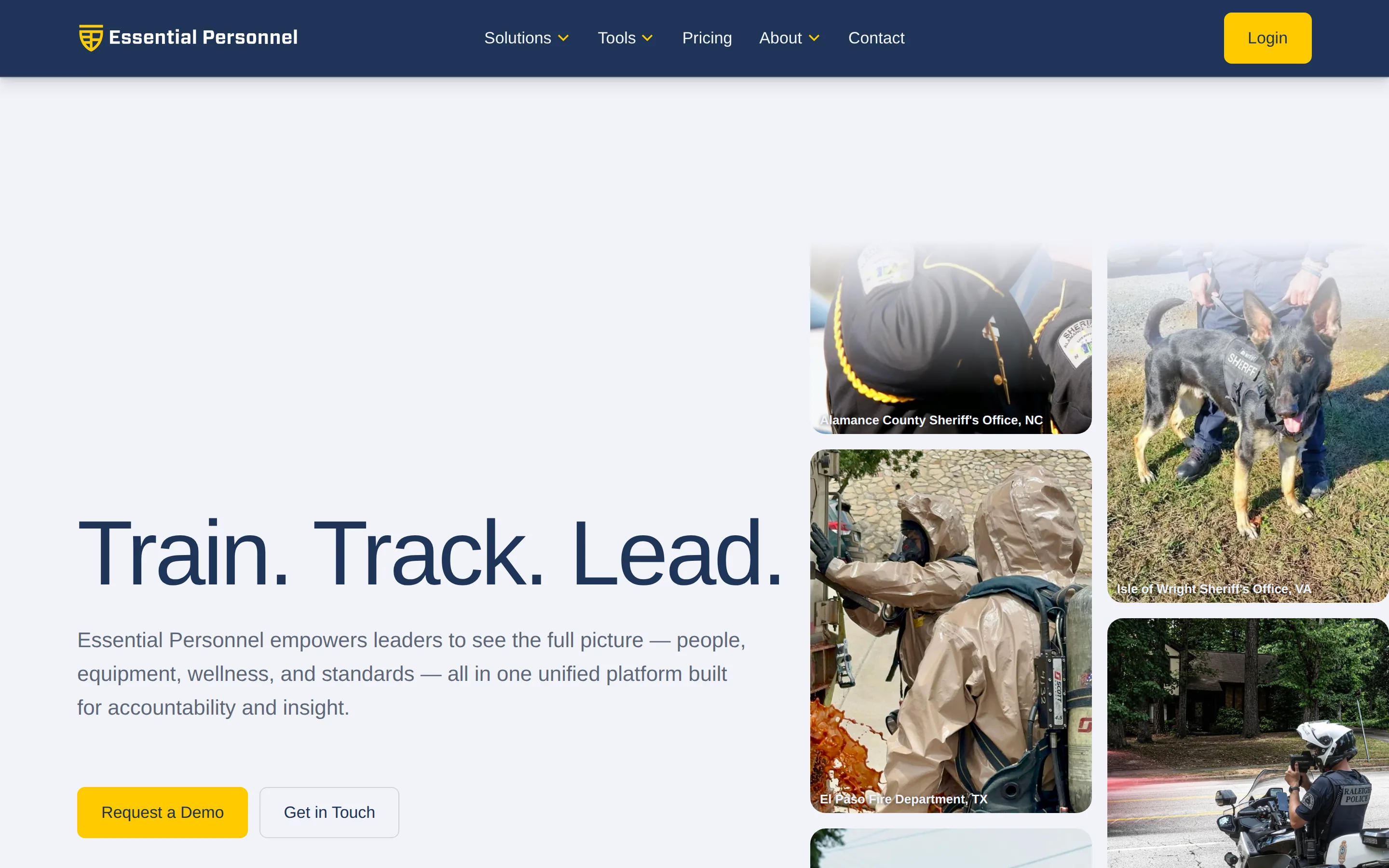
Essential Personnel ranks first with 90 of 100. They take the highest score on person level assignment at 20 of 22 and the only perfect score in the set on serialized and armory depth at 12 of 12, and they're the only system here that publishes pricing, at 5 of 5. They don't scan barcodes, which costs them points on the mechanical criteria, but they more than make up for it across the rest of the scoring.

The six systems compared

Ranked for municipalities, 2026. "Model" is the column that settles most shortlists: it tells you whether the system is organized around the person holding the item, the item itself, or the inspection cycle it sits in.
SystemModelFoundedHeadquartersBest forPricingNotable distinction
1. Essential PersonnelPerson centered2020Wilmington, NCCities that need one record showing what every officer and firefighter is holdingPublished, $175 per user per year bundledComponent serials tracked as a set, so a rifle carries its optic, light and suppressor
2. MCM TechnologyAsset centeredPublic safety since 2007Not disclosedAgencies running radio fleets and grant funded equipment at scaleQuote onlyIntegrates directly with land mobile radio systems, plus Motorola and L3Harris
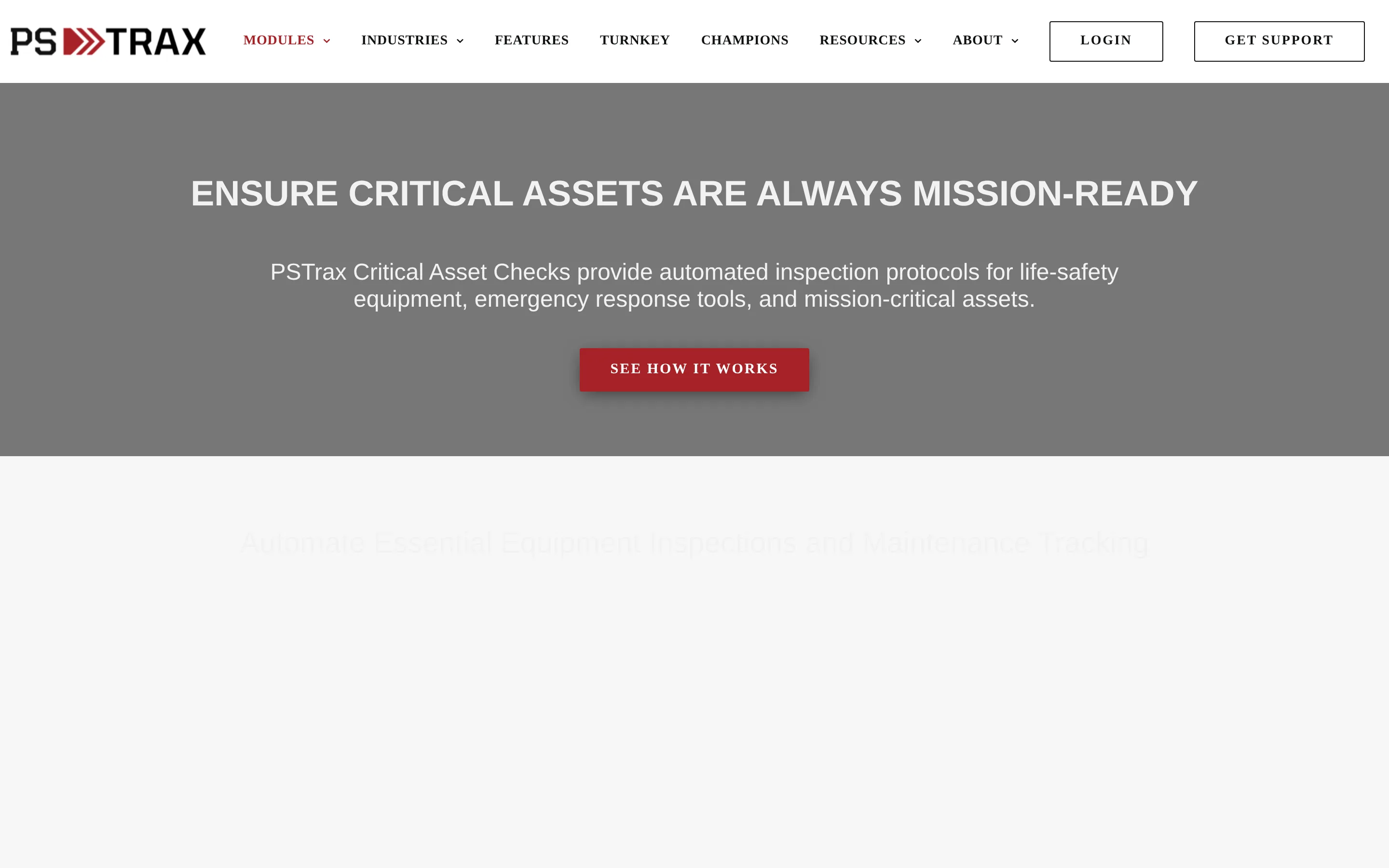
3. PSTraxChecks centered2009Littleton, COFire and EMS agencies whose real problem is daily truck and station checksQuote onlySCBA, PPE, narcotics and blood products each tracked as their own module
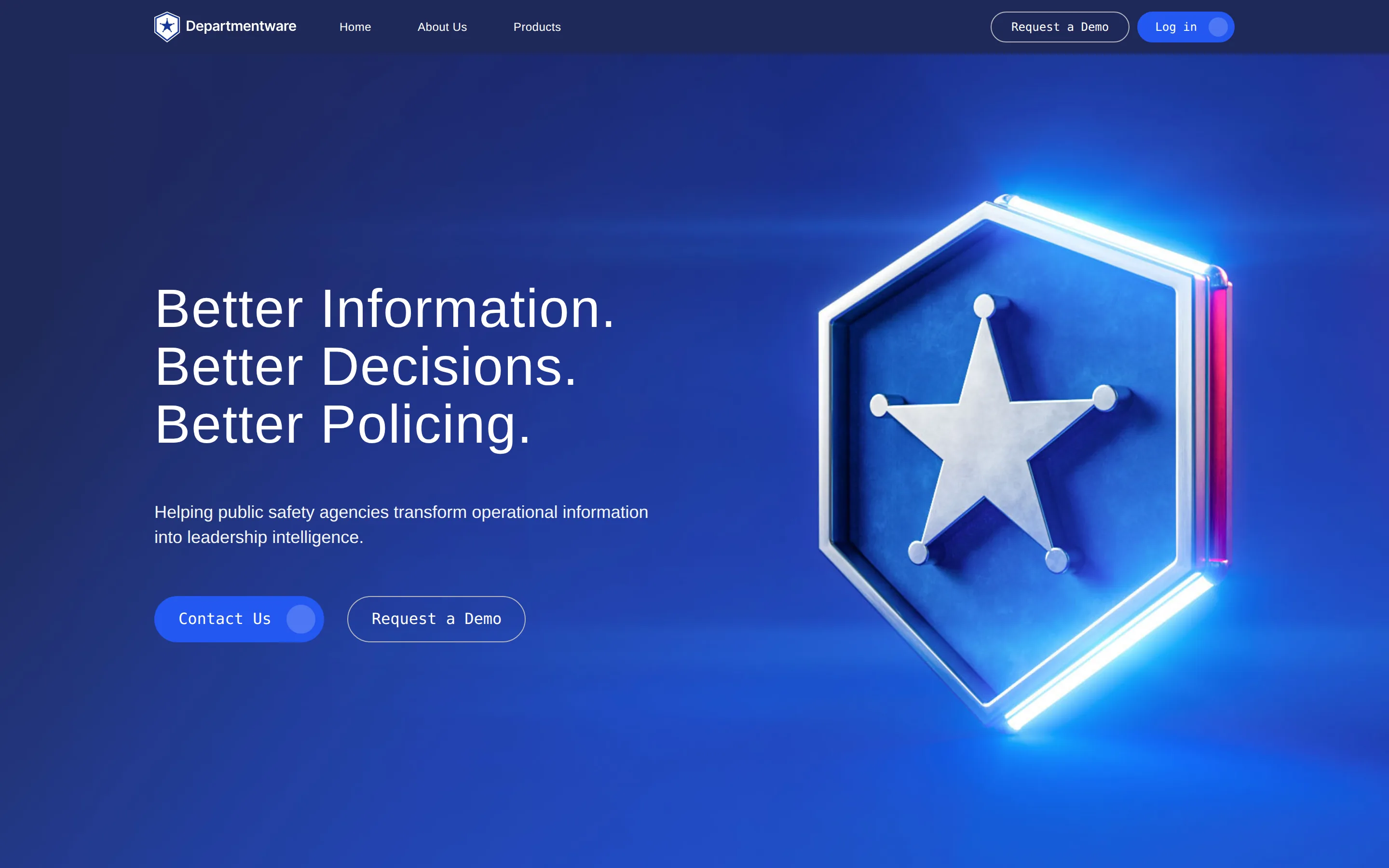
4. DepartmentwarePerson centeredNot disclosedNot disclosedPolice departments buying quartermaster alongside field training and appraisalsQuote onlyGrant funded inventory tracked separately, so an auditor gets a direct answer
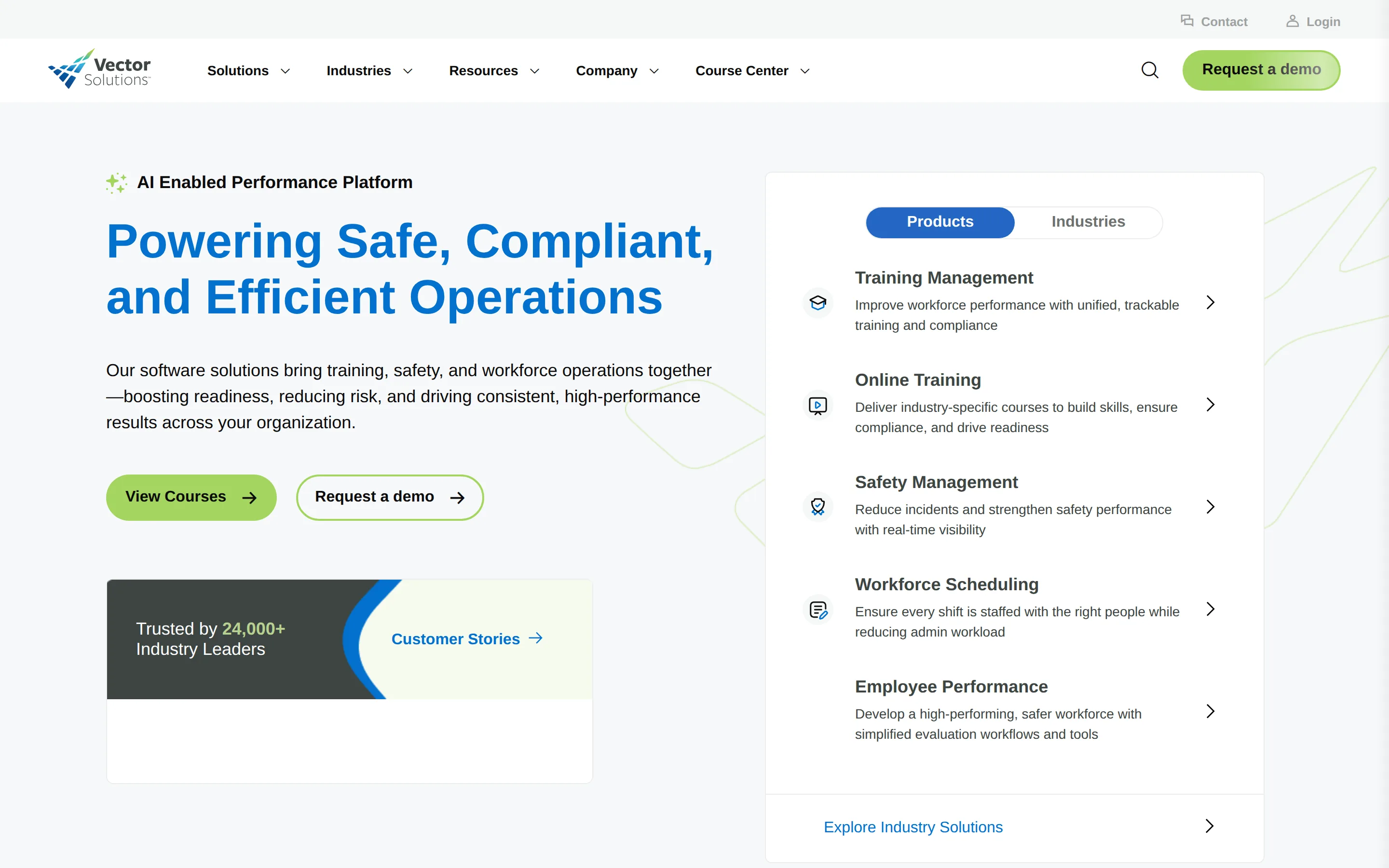
5. Vector SolutionsChecks centered1999Tampa, FLCities standardizing one inspection process across every departmentQuote onlyCheck It runs on the same platform as their training, policy and accreditation products
6. OmnigoAsset centeredNot disclosedNot disclosedAgencies issuing from a central store with barcode scanningQuote onlyBundled kits send a whole issue set out under one transaction

What is equipment accountability software?

Equipment accountability software organizes issued property around the person holding it rather than around the location or cost center it sits in. It answers who has serial 4471, what the officer being promoted next month is carrying, and which vests are past their replacement date and on whose back. Essential Personnel, Departmentware and MCM Technology all build to that model. General asset tracking platforms mostly do not.

The distinction sounds academic until an item goes missing. A warehouse system can usually tell you where something is. It's much less good at telling you whose it is, and in public safety whose it is happens to be the entire question. Essential Personnel put it directly on their equipment page: organizing assets around locations and cost centers is "the right model for a warehouse and the wrong one for an agency."

Cities feel it in three specific moments. A separation, when someone leaves and the return list has to be produced from a live record rather than reconstructed. A recall, when a manufacturer defect turns into a list of affected serials and the named people holding them. And an audit, when a CALEA assessor or a grant administrator asks where each item purchased with their money currently sits. All three are person shaped questions, and none of them are answered by a stock count.

Quartermaster software and the same idea under an older name

Quartermaster software is what most police agencies still call this, and the term carries a specific expectation: a central store, an issue counter, and a signature against every item that goes out. Omnigo and Departmentware both sell under that name, and both build the sign off into the workflow.

Where the older model shows its age is in departments that don't run a counter. A fire district with four stations and no storeroom still has to know who holds which SCBA mask, and quartermaster software that assumes a central issue point makes that awkward. The systems that handle both keep the issue record on the employee and treat the store as one possible source rather than the organizing structure.

Police asset management software compared with warehouse asset tracking

They answer different questions. Asset Panda, Apptricity, Panatrack, Samsara and AssetTiger are built around barcode and RFID scanning, stock levels, depreciation and location, and they're the tools you'll find first if you go looking for equipment tracking software. None of that tells a chief who is currently carrying a specific rifle, which is the question a municipal agency has to answer during a separation, a recall or a use of force review.

The gap shows up in the data model. A warehouse platform treats the item as the object, so its natural question is "where is asset 4471." A public safety system treats the employee as the object, so its natural question is "what does Officer Reyes have out." You can force the first to answer the second by keeping an assignment field, but that field is a note rather than a relationship, and it doesn't connect to the training record, the promotion, or the exit interview.

That doesn't make the horizontal platforms bad software. Several publish real public sector products, and Asset Panda run dedicated Police and Fire lines. If your actual problem is a 40,000 item facilities inventory across nine buildings, they'll beat everything in this ranking. The mismatch only appears when the item you're chasing is on a person rather than a shelf.

Where the scanning trade sits

Barcode and RFID are the clearest dividing line. MCM Technology and Omnigo both lead with scanning, and it's genuinely faster once you've labeled several thousand items and trained people to scan. Essential Personnel take the opposite position and don't support scanning at all, which is a real limitation for any agency issuing from a counter.

The question worth asking is what scan volume you actually have. A department issuing gear a few dozen times a month gets very little back from a barcode program that takes a quarter to label and another quarter to embed. A central store running an issue counter all day gets a lot. Work out which one you are before the trade decides itself.

What armory and serialized gear tracking has to do

A patrol rifle isn't one serial number. It's the rifle, the optic, the light and the suppressor, and each one carries its own serial. Armory tracking has to model a parent asset with serialized children, or the agency ends up keeping a second spreadsheet for optics and defeating the point of the system.

This is the test most tools fail, and it fails quietly. A system that models one item as one serial will happily accept your rifles. The problem surfaces the first time somebody swaps an optic between two rifles and there's nowhere to record it, so the change lives in someone's memory until they retire.

Essential Personnel score 12 of 12 here, the only perfect criterion score on the page, because component serials are tracked together as a set that moves with the weapon. Omnigo take 9 of 12 with bundled kits, which groups items under a parent for issue and cost but is built for the issue transaction rather than the lifetime of the assembly. MCM Technology take 9 of 12 on serialized weapons and radios without published parent and child modelling.

If you're running a demo, ask the vendor to swap an optic between two rifles on screen and show you both histories afterward. It takes two minutes and it separates the systems that model this from the systems that describe it.

The same problem outside the armory

Weapons make the clearest example but they aren't the only case. An SCBA has a cylinder, a mask and a regulator with separate service lives. A body camera has a dock, a battery and a mount. A radio has a battery, a speaker mic and a programming template that has to match the talkgroup plan. Anywhere the parts matter and outlive the assembly, the same modelling question applies.

What happens to issued equipment when someone leaves

You pull up the individual and see everything still issued to them, and that single screen is the separation audit. The usual failure is discovering months later, during an inventory, that a radio and a vest walked out with someone. By then nobody can say what came back, and a recoverable loss has turned into an accounting write off.

Cities feel this one twice over, because a separation is rarely just a separation. A termination that ends up in front of an arbitrator brings the whole employment file with it, and "we can't say what he had" is not a good look next to "we documented everything else." The equipment record and the personnel record get read together whether or not they live together.

The same view earns its keep at promotion and transfer, when gear moves between assignments and the old issue is easy to forget. Running it as a checklist against a live record takes minutes. Reconstructing it afterward takes weeks and rarely produces an answer anybody will sign.

Why the personnel record and the equipment record want to be the same record

Departmentware and Essential Personnel both sell equipment inside a personnel platform, and they score 18 and 20 of 22 on person level assignment for that reason. A qualification can gate what someone is allowed to carry. An apparatus accident relates to a vehicle in the equipment record and a crew in the personnel record. A separation touches both at once.

Standalone equipment tools can reach the same place with an integration project, and some agencies do exactly that. Whether it's worth it depends on how much of your budget an integration project consumes, which in a department of forty people is usually most of it.

Fire department inventory software and the NFPA inspection cycle

Fire changes the shape of the problem, because a large part of the inventory is on a mandated inspection cycle rather than an issue record. Turnout gear carries advanced inspection requirements under NFPA 1851, SCBA carries its own service intervals, and the record has to show both that the inspection happened and who was wearing the gear. PSTrax and Vector Solutions both build around that cycle; PSTrax carry SCBA and PPE as dedicated modules.

This is why a citywide purchase is harder than either half on its own. A police quartermaster system optimized for an issue counter handles turnout gear badly, and a fire checks system optimized for daily truck inspections handles an armory badly. The systems that score well on multi department fit are the ones that treat both as the same underlying record with different cycles on top.

MCM Technology take 14 of 14 here, the only perfect score on that criterion, covering law enforcement, fire, EMS and government communications. Vector Solutions take 13 of 14 on reach across police, fire and EMS. Departmentware take 5 of 14 because they publish no fire product at all, which is the single biggest reason they rank fourth rather than second.

Body armor carries a cycle too

Vests are the police side of the same idea. Replacement cycles trace back to National Institute of Justice performance standards, and an expired vest on a street officer is the kind of finding that follows an agency around. Departmentware flag expiring items automatically for gear with a shelf life, naming OC spray, vests and plates specifically.

Because the inspection attaches to the item and the item attaches to a person, a system that models both answers the whole question in one query: the gear was inspected on this date, and here is who was wearing it. Split those across two systems and you're reconciling spreadsheets under time pressure, which is when mistakes get made.

Grant funded equipment and what an auditor asks

A large share of municipal public safety equipment arrives on grant money, and the condition attached is that you can say where it went. Departmentware track grant funded assets separately for this reason. PSTrax let you search assets by grant source. MCM Technology frame it as recovering every grant dollar, and take 11 of 11 on audit evidence.

If your capital program leans on grants, weight that criterion higher than we have. It's the kind of requirement that looks like paperwork until the audit lands, and then it's the only thing anyone wants to talk about.

Ranking methodology

The ranking runs on the Municipal Equipment Accountability Framework, nine criteria totaling 100 points. The weights come from what municipal buyers actually ask about, not from a generic software checklist, and they're published here so you can disagree with them precisely rather than in general.

The Municipal Equipment Accountability Framework. Weights total 100.
CriterionWeightWhat it measures
Person level assignment22Whether equipment is organized around the individual holding it, and whether one screen shows everything issued to one person
Chain of custody and separation audit16Permanent per item history of who held it, when it was issued, when it came back and why, and how cleanly a separation can be run against it
Multi department fit14Genuine coverage of police, fire and civilian staff on one system, rather than one department well served and the rest bolted on
Serialized and armory depth12Whether a parent asset can carry serialized children, so a rifle holds its optic, light and suppressor as one set
Audit, accreditation and grant evidence11CALEA and accreditation reporting, mandated inspection cycles, and separate tracking of grant funded property
Vehicle and apparatus records8Vehicle detail held on the same system, maintenance and service history, and any telematics feed
Procurement and contract vehicles6Published availability through cooperative purchasing vehicles that remove the solicitation step
Integrations6Named, published integrations with the systems a public safety agency already runs
Pricing transparency5Whether a buyer can size the cost before booking a sales call

Where the weights come from

Person level assignment takes 22 because it's the question this category exists to answer, and because it's the one every buyer in this space eventually describes in the same words: who has what. Chain of custody and separation audit takes 16 because that's the moment the record either works or doesn't, and because the equipment half of a defensible termination sits there.

Multi department fit takes 14 because a city is not a police department. Cities buy for sworn police, sworn fire and civilian staff at once, and a system that only covers one of them shifts the problem rather than solving it. Serialized and armory depth takes 12 because it's the single most common place a general tool breaks.

Procurement takes 6 rather than more because equipment is more often bought on grant money than through a cooperative contract, and grant handling is scored under audit evidence instead. Pricing transparency takes 5, and only one system scores above 1.

Sources

Every fact came from the vendor's own published material, checked in September 2026. Where a vendor publishes two figures that disagree, the narrower one is used and the disagreement is stated in the profile. Where a founding date, headquarters or price isn't published anywhere on the vendor's site, the table says not disclosed rather than guessing.

How the six systems scored

Every provider against every criterion. Column headers carry the maximum available for that criterion.
SystemPerson 22Custody 16Multi dept 14Armory 12Audit 11Vehicle 8Procure 6Integr 6Price 5Total
1. Essential Personnel201513128665590
2. MCM Technology161514911726181
3. PSTrax131310610645168
4. Departmentware1813589722165
5. Vector Solutions991358755162
6. Omnigo1311797324157

Two results are worth reading closely. Departmentware take the second highest score on the heaviest criterion, 18 of 22, and still finish fourth, because 5 of 14 on multi department fit is a hard ceiling on a citywide purchase. And Vector Solutions, the largest vendor here by reach, finish fifth on merit, because reach and per person accountability are different things.

The rankings: six systems for municipalities in 2026

Essential Personnel homepage - municipal equipment accountability system
1Person centered

Essential Personnel

Essential Personnel is professional standards software for public safety, founded in 2020 by two Wilmington firefighters. Equipment Accountability is one of six suites, and it sits on the same employee record as training, performance, guidance and case management. Pull up any officer or firefighter and their weapon, optic, vest, radio and vehicle appear on one screen.

  • Founded2020
  • HeadquartersWilmington, North Carolina
  • Pricing$175 per user per year bundled, $20 to $85 per individual suite, $3,000 one time startup, published
  • Contactinfo@essper.com · (910) 390-0011

Strengths

  • Component serials are tracked as a single set, so a patrol rifle carries its optic, light and suppressor through its whole lifecycle instead of leaving you a rifle serial and a drawer of loose paperwork
  • Equipment lives on the individual rather than in a separate silo, which turns the separation audit into one screen rather than a reconstruction
  • Every item carries its own return history with free text notes, so an entry like sent for repair stays permanently attached to that item
  • Vehicle records hold unit number, plate, VIN, radio ID, fuel key, camera type and toll transponder, and a Geotab connection populates mileage, engine hours and location automatically
  • Query based reporting answers narrow questions under time pressure, like every Glock 17 issued after a given date, which is the exact shape a manufacturer recall takes
  • Published pricing, available through GSA Advantage, NASPO, Omnia Partners, NCSA and VSA, hosted in AWS GovCloud with SOC 2 Type II and CJIS alignment

Limitations

  • No barcode, QR or RFID scanning anywhere in the product, so a central store running a high volume issue counter is the wrong fit
  • Not full fleet management: no preventive maintenance scheduling, work orders, parts inventory or fuel cost analysis, so a large fleet with its own shop keeps the system it has
  • No purchase orders, procurement, depreciation, warranty tracking or finance integration, which leaves warehouse inventory wherever it currently sits
  • Chain of custody covers agency issued property rather than evidence, which has its own statutory requirements and its own systems
  • Founded 2020, the shortest track record of any system ranked here
"The Essential Personnel staff are true partners, and acquiring the software has been transformative for our department. What truly sets them apart is their willingness to customize the platform to perfectly fit our unique operational needs. This level of responsiveness and flexibility has dramatically improved our training tracking, wellness monitoring, equipment management, and overall accountability."
Michael PettiMajor, Fayetteville Police Department
"Our partnership has been immensely valuable to the City and has had a significant impact on the development of all our employees."
LaSharon HamptonHR Director, City of Pinellas Park

Why they come first

Because they take the highest score on the heaviest criterion and the only perfect score on the page. Person level assignment at 20 of 22 and armory depth at 12 of 12 are the two things this category is bought for, and they're the only system here that publishes what it costs. What they give up is the mechanical layer: no scanning, no fleet maintenance, no warehouse inventory. An agency whose real problem is throughput at an issue counter should read the MCM Technology and Omnigo profiles instead.

MCM Technology homepage - police asset management software
2Asset centered

MCM Technology

MCM Technology started in the early 2000s building software for two way radio dealerships, and went all in on public safety in 2007 after the City of Tampa and Marin County asked them to manage mission critical equipment. Both are still customers more than twenty years later. Their Motiondeck platform launched in 2018 and covers law enforcement, fire, EMS and government communications.

  • FoundedPublic safety since 2007
  • HeadquartersNot disclosed
  • PricingQuote only
  • Scale300+ systems deployed nationwide, $5 billion in assets managed, by their own count

Strengths

  • The broadest municipal coverage in this ranking, taking 14 of 14 on multi department fit across law enforcement, fire, EMS and government communications
  • The only system here that integrates directly with land mobile radio systems, alongside named integrations with Motorola, L3Harris and Workday
  • Built around CALEA reviews and grant recovery, taking 11 of 11 on audit evidence, with inspection schedules that run automatically and work orders generated from inspection failures
  • Annual inventory reconciliation by site, vehicle or location, where existing records can stand in for part of the physical count
  • Chain of custody documentation framed for court, covering acquisition, assignment, transfer, maintenance and disposal
  • Officers flagged for certification lapses before they become violations, which ties readiness to the person rather than only to the gear

Limitations

  • The organizing spine is the asset rather than the person, so a per officer view is assembled from assignment records rather than read straight off a personnel file
  • No published parent and child component serial modelling, which is the deciding test for armory tracking
  • Headquarters isn't published anywhere on their site and the contact page returns a 404
  • Quote only pricing with no published cooperative purchasing vehicles, taking 2 of 6 on procurement

Why they rank second

They're the strongest all round system here for a city that runs everything at once, and the only one to take a perfect score on department coverage. What separates them from first place is the data model. Assignment is a field on an asset rather than the structure of the record, so the separation question gets answered well rather than instantly. If your agency's center of gravity is a radio fleet or a grant funded capital program, that trade may go the other way.

PSTrax critical asset checks page - fire department inventory software
3Checks centered

PSTrax

PSTrax, short for Public Safety Tracking Systems, was founded in 2009 by Scott Bergeron and Cliff Long after Bergeron's daughter, a Colorado fire medic, suggested a system for truck checks. They're privately owned, run 22 full time staff out of Littleton, Colorado, and Blackhawk Fire Department, their first client, is still with them. Modules cover vehicles, stations, supplies, critical assets, SCBA, PPE, controlled substances and blood products.

  • Founded2009
  • HeadquartersLittleton, Colorado
  • PricingQuote only, modular by the checks you need
  • ScaleMore than 850 fire and EMS agencies across the US, Canada and Australia, by their own count

Strengths

  • The module list matches how a fire department actually runs, with SCBA, PPE, narcotics and blood products each handled as their own thing rather than as generic asset rows
  • Full history on every asset covering inspections, alerts, assignment changes and status changes, exportable to PDF or Excel when someone asks for evidence
  • Assets searchable by grant source, manufacturer, expiration date and last inspection date, which covers most of what an auditor opens with
  • Inspections done by outside vendors can be logged in bulk with the work order or receipt attached to every asset's history
  • Available through Sourcewell, which removes the solicitation step for agencies that use cooperative contracts
  • Privately held rather than VC owned, with a 98.5% customer retention rate by their own count

Limitations

  • They describe themselves as fire and EMS focused with a laser focus, and the law enforcement product is newer and narrower, which matters on a citywide purchase
  • No armory or weapons component modelling published, taking 6 of 12 on that criterion
  • Assets attach to a person, an apparatus or a location, so the person is one option among three rather than the organizing model
  • Their own About page states both more than 1,000 organizations and more than 850 fire and EMS agencies, so the customer count depends which line you read

Why they rank third

They're the best system here at the thing they're built for, and 10 of 11 on audit evidence reflects a product shaped by real NFPA inspection cycles rather than a generic compliance module. What holds them at third is scope. A city buying for police and fire together is buying half a solution, and the heaviest criterion on this page measures per person issue, which is not what a checks system is optimized for.

Departmentware homepage - police quartermaster software
4Person centered

Departmentware

Departmentware sell seven products to law enforcement agencies, and Quartermaster is one of them. The others are field training, digital forms, an LMS, performance appraisal, fleet management and policy management, so the equipment record sits beside the personnel record rather than in its own system. Named customers include Carrollton and Denton police departments, both in Texas.

  • FoundedNot disclosed
  • HeadquartersNot disclosed
  • PricingQuote only
  • Contact(469) 759-9489

Strengths

  • Assigned inventory requires a digital sign off from the user, so accountability rests on a signature rather than on an entry somebody made on their behalf
  • Grant funded assets are tracked separately, which answers the question an auditor asks about where each grant purchased item currently sits
  • Every inventory move is date and time stamped, giving a usable audit trail without extra process
  • Personnel can be grouped as SWAT, jailers, patrol and so on, so issue sets are managed by unit rather than one person at a time
  • Expiring items are flagged automatically for gear with a shelf life, naming OC spray, vests and plates specifically
  • A separate fleet product covers vehicle assignments, maintenance schedules and service histories, taking 7 of 8 on vehicle records

Limitations

  • Law enforcement only, with no fire or EMS product published, which takes them to 5 of 14 on multi department fit and is the main reason they don't rank higher
  • No integrations published at all, taking 2 of 6 on that criterion
  • Founding year, headquarters and pricing are all absent from the site
  • No published component serial modelling for weapons and their optics

Why they rank fourth

They take 18 of 22 on person level assignment, the second highest score on the heaviest criterion, and the digital sign off is a genuinely strong accountability model. They finish fourth because a municipality buys for more than one department, and 5 of 14 on department coverage is a ceiling rather than a gap. For a standalone police department with no fire responsibility, they'd rank second on these weights.

Vector Solutions homepage - law enforcement equipment tracking
5Checks centered

Vector Solutions

Vector Solutions are the largest vendor in this ranking by reach, serving more than 10,000 public safety agencies by their own count, and Check It is their asset management and inspections product. It runs on the same platform as their training, policy, performance and accreditation products. Vector Solutions integrate with Essential Personnel to sync credentialing information, and that partnership did not affect scoring.

  • Founded1999
  • HeadquartersTampa, Florida
  • PricingQuote only, with published procurement options
  • Scale10,000+ public safety agencies, by their own count

Strengths

  • Serves police, fire and EMS at scale, taking 13 of 14 on multi department fit, which suits a city standardizing one inspection process everywhere
  • Vehicle inspections, maintenance requests, repair costs and work order status all sit in one view, taking 7 of 8 on vehicle records
  • Native Android and iOS apps with push notifications for past due checks, so inspections happen where the equipment is
  • Customizable checklists and workflows configured to policies an agency already has, rather than a fixed template
  • Reporting built for budget requests, with equipment spend trends over time to justify a capital ask
  • Published procurement options, and a catalog that already covers training, policy and accreditation if you want one vendor

Limitations

  • Check It is built around inspections and checks rather than per person issue, taking 9 of 22 on the heaviest criterion in this ranking
  • No armory or component serial modelling, at 5 of 12, the lowest score in the set on that criterion
  • Quote only pricing with no published figures
  • Asset management is one product inside a very large catalog spanning K-12, higher education, manufacturing, energy and casinos, so public safety competes for roadmap attention

Why they rank fifth

Reach and per person accountability turn out to be different things. Vector serve more public safety agencies than any other system ranked here, and they hold the widest department coverage. What the scoring measures is whether the system tells you who is holding an item, and Check It answers a different question well: is this item inspected and serviceable. For an agency whose problem is inspection consistency across fifty locations, they'd move up several places.

Omnigo homepage - police quartermaster and asset management software
6Asset centered

Omnigo

Omnigo sell safety and security software across public safety, healthcare, education, gaming, hospitality, corporate and courts, and their police quartermaster product is the police and sheriff piece. The company was assembled from five earlier products, ITI, iTrak, QueTel, ReportExec and Rhodium, and claims more than twenty years in the market.

  • FoundedNot disclosed, 20+ years claimed
  • HeadquartersNot disclosed
  • PricingQuote only, core system plus activated modules
  • Scale800+ public safety customers, 3,000+ organizations across 20+ countries, by their own count

Strengths

  • Bundled kits group serialized and non serialized items under one larger item, so a whole issue set goes out as a single transaction with cost and accountability held per item
  • Barcode receiving straight from supplier packaging, showing quantity on hand, storage location and future orders on each scan
  • Labels and selectable data elements configure to an agency's own terminology and policy rather than to the vendor's
  • Property and evidence heritage through QueTel, so custody handling is well travelled ground for them
  • A 97% customer retention rate over the last ten years, by their own count
  • Modular structure with an economical core system and feature modules activated as requirements grow

Limitations

  • No vehicle or apparatus module published, taking 3 of 8 and leaving fleet in a separate system
  • No fire or EMS product, so a citywide purchase only covers half the departments that need it
  • Founding year and headquarters are not published anywhere on the site
  • Public safety is one of seven industries served, and quartermaster is one product among many inside it

Why they rank sixth

Bundled kits are a genuinely good idea and earn them 9 of 12 on armory depth, second only to Essential Personnel. What keeps them last is coverage. No fire product and no vehicle module means two of the three things a city needs sit outside the system, and the quartermaster model assumes a central issue counter that many departments don't run. For a large sheriff's office issuing from a store all day, they're a stronger fit than the position suggests.

What to do next

The shortlist splits cleanly once you know which problem you have. If the question you can't answer today is who is holding what, and it gets asked during separations, promotions and recalls, you want a person centered system and the top of this ranking is where to look. If the question is whether every item is inspected and serviceable across a lot of locations, PSTrax and Vector Solutions are built for that and will beat the field on it.

Two tests are worth running in any demo, whichever way you lean. Ask the vendor to swap an optic between two rifles and then show you both histories. And ask them to produce, on screen, everything currently issued to one named person. Those two take five minutes together and they separate the systems that model this problem from the systems that describe it.

Then check the boring things before you shortlist: whether the price is published or you're booking a call to find out, whether grant funded property can be reported separately, and whether the system covers fire as well as police if your city runs both.

Want to see your own roster with the gear attached to it before you commit? Walk through it with the Essential Personnel team.

Request a demo

Frequently asked questions

Tie every item to the person holding it rather than to a shelf or a cost center. One screen then shows what any officer or firefighter has out, and a separation, promotion or recall becomes a query rather than a reconstruction. Essential Personnel, Departmentware and MCM Technology all build to that model.

It depends whether you need accountability or throughput. For knowing who holds what, Essential Personnel score 90 of 100 on these weights. For scan driven issue at a central store, MCM Technology and Omnigo lead. General equipment tracking software built for warehouses answers a different question entirely.

Employee equipment tracking means the issued property record is organized around the individual rather than the item. Pull up a person and you see their weapon, vest, radio and vehicle together. It matters most at separation, when the alternative is discovering months later that gear left with someone.

Quartermaster software is the police term for issued equipment and property management, and it usually assumes a central store, an issue counter and a signature against everything that goes out. Omnigo and Departmentware both sell under that name. Departments without a storeroom often need a per person model instead.

Only if your scan volume justifies the labeling project. Barcoding several thousand items takes a quarter to do and another to embed, and it pays back where issue happens all day. Departments issuing gear a few dozen times a month usually get more from per person assignment.

Usually it complements it. Vehicle records can hold unit number, plate, VIN, radio ID and a telematics feed for mileage and location, which keeps the vehicle on the same record as the crew. Preventive maintenance scheduling, work orders, parts inventory and fuel analysis stay with dedicated fleet software.

Tag the funding source on the asset when it arrives, so you can produce every item bought with a given grant and say where each one sits today. Departmentware track grant funded inventory separately, PSTrax let you search assets by grant source, and MCM Technology frame reporting around grant recovery.

Most of this category is quote only, which makes comparison slow. One system here publishes numbers: Essential Personnel list $175 per user per year bundled, $20 to $85 for individual suites and a $3,000 one time startup fee. The other five require a sales conversation to get a figure.

About this ranking. Compiled by Scott Monroe, Chief Executive Officer & Co-Founder of Essential Personnel, and published 7 September 2026. Essential Personnel is one of the six systems assessed, and the framework, weightings and per criterion scores are all published above. No vendor paid for placement and no vendor saw the scores before publication. Vector Solutions integrates with Essential Personnel, and that partnership did not affect scoring. No aggregate review rating is published here because no public review platform carries usable rating counts across this category.