
Law Enforcement Professional Standards
Most agencies looking at Guardian Tracking alternatives aren't unhappy with what it records. They're unhappy with what it doesn't reach. Guardian Tracking documents conduct and flags patterns, and then the training file, the certifications, the equipment, the org chart and the recruit's task book live somewhere else. The eight law enforcement performance management systems below are scored on the whole career record, not just the conduct layer, and ranked on the weighted total.
This ranking is written for the people who have to make the call: police chiefs, and the IT and HR leaders who support them. It sets out what's actually on the market for law enforcement performance management, what each system is built to do, and where each one runs thin, so you can match a replacement to the gap you have rather than to the gap a demo shows you.
Each system is scored against seven weighted criteria out of 100. Performance documentation carries 25 and field training records 20, because those are what agencies ask about most, followed by early intervention and internal affairs case management at 15 each, then CJIS and accreditation reporting, pricing transparency and integrations. The methodology sets out every weight, and each criterion is published beside the total so you can reweight them for your own gap.
Essential Personnel ranks first among the eight at 87 out of 100. They take the highest score on performance documentation, on field training records and on pricing transparency, and they tie for the highest on CJIS and accreditation reporting. At $175 per user per year against Guardian Tracking's $1,200, they are also the cheapest system here by a wide margin. They give up ground on internal affairs case management, where the dedicated investigative tools go deeper, so an agency whose real bottleneck is the complaint caseload should read the internal affairs column and shortlist Versaterm IAPro instead. What EP does better than anything else here is keep one officer's evaluations, commendations, counseling, certifications, equipment and recruit file on a single record that still holds up years later.
| System | Score | Built for | Founded | Headquarters | Best for | Pricing |
|---|---|---|---|---|---|---|
| 1. Essential Personnel | 87 | Professional standards system of record | 2020 | Wilmington, NC | Agencies whose records are spread across five systems and a filing cabinet | Published, $175 per user per year |
| 2. Benchmark Analytics | 74 | Officer performance and early intervention | 2015 or 2017 | Chicago, IL | Agencies replacing Guardian's flags with a research-grade risk model | Quote only |
| 3. Lexipol | 68 | Policy, with performance reporting | 2003 | Frisco, TX | Agencies buying policy, field training and wellness together | Quote only |
| 4. NEOGOV (PowerDMS) | 64 | Government HR suite | 1999 | El Segundo, CA | Departments whose city already runs PowerDMS | Quote only |
| 5. Versaterm IAPro | 63 | Internal affairs case management | 1977 | Ottawa, Ontario | Agencies whose bottleneck is the complaint caseload | Quote only |
| 6. Axon Standards | 54 | Standards tied to evidence | 1993 | Scottsdale, AZ | Agencies already standardized on Axon | Quote only |
| 7. Police Trak Systems | 51 | Internal affairs and early warning | 1984 | Green Cove Springs, FL | Agencies wanting a focused early warning tool without a suite | Quote only |
| 8. ProPhoenix | 47 | CAD and records, with an IA module | 2003 or 2004 | Moorestown, NJ | Agencies replacing CAD and RMS at the same time | Quote only |
Agencies replace Guardian Tracking for seven reasons: it costs $1,200 per user per year, officers read it as a case file being built on them, confidentiality settings are easy to set wrong, permissions don't slice cleanly at a larger agency, it documents conduct but doesn't run the evaluation, high-volume entry is slow, and the record stops at conduct so training, certifications and equipment stay in other systems.
Guardian Tracking is a competent law enforcement performance management product and its Capterra reviews average 4.4 out of 5, with customer service rated 4.8. The reasons agencies move are about price and scope rather than quality, and the same seven turn up whether you read the review sites or ask a chief who has run it for five years.
That's the number to start from, because it sets what everything else has to justify. A 100-officer department pays $120,000 a year for conduct documentation and early intervention. A 500-officer department pays $600,000. The certifications, task books, equipment records and field training files are not in that figure, so the real annual spend is Guardian Tracking plus whatever holds the rest.
Essential Personnel is $175 per user per year for every module, published on the site rather than quoted. At 100 officers that's $17,500 against $120,000, and it absorbs the training records subscription sitting next to Guardian Tracking today. The full comparison by agency size is further down.
This is the one that decides adoption. The category was put under national scrutiny after the killing of George Floyd, and StateScoop reported the acquiring company's chief executive arguing that the right system would have flagged Derek Chauvin on complaint volume. That framing is about catching misconduct, and officers hear it. One police chief reviewing the product on Capterra described initial resistance and slow adoption that took training and deliberate buy-in to overcome.
Agencies that solve this do it by changing what the record is mostly used for. When commendations, 360 feedback, training milestones and critical incident exposure outnumber the negative entries, the system stops reading as a disciplinary tool. That's a reason to look at what else a platform holds, not just what it flags.
Two reviewers raise this independently. A director of communications and IT at a law enforcement agency found it "slightly confusing when selecting if a post should be confidential or public," and a shift commander flagged visibility conflicts with internal investigations. SelectHub's analyst summary carries the same point. On a system holding counseling notes, wellness contact and complaint material, a setting that's easy to get wrong is a public records problem waiting to happen.
An administrative lieutenant reported difficulty setting up small groups rather than direct subordinates only. SelectHub notes that agencies with intricate team structures find the limits on small groups a hindrance. This is what bites when a professional standards unit, a peer support team and a training division all need different slices of the same record, and it's the most common reason a mid-size agency outgrows the product.
A shift commander's review notes the absence of a programmable form for employee evaluations. That's the practical split: Guardian Tracking holds the entries a supervisor makes through the year, and the annual evaluation still gets built somewhere else, usually in a Word template. Agencies that want the entries to roll into a structured evaluation with comparable ratings are asking for something the product wasn't built to do.
A commander asked for a mass approval route, having to read the same entry fifty times for fifty different people. A chief of police noted the system can run slowly at times and that an administrator can be overwhelmed with information if the flow isn't configured carefully. None of these is fatal on its own. Together they're why the product is often described as needing a step-by-step setup before it behaves.
This is the structural one. Guardian Tracking covers performance documentation, early intervention, use of force and recognition. It doesn't hold certifications and recertification deadlines, task books, equipment assignment, the org chart or the recruit's field training file. Those come from Acadis or another product in the same portfolio, which means a second subscription, a second login and a roster maintained twice.
The cost of that split never appears on a price sheet. It appears when someone has to assemble a promotion packet, answer an accreditation assessor or produce an officer's complete history for a lawyer, and the history is in four places.
| Criterion | Guardian Tracking | Best of the eight |
|---|---|---|
| Performance documentation and evaluation | 20 / 25 | 24, Essential Personnel |
| FTO and recruit training records | 16 / 20 | 19, Essential Personnel |
| Early intervention and risk identification | 13 / 15 | 14, Benchmark Analytics |
| Internal affairs case management | 11 / 15 | 15, Versaterm IAPro |
| CJIS and accreditation reporting | 8 / 10 | 9, three systems tie |
| Pricing transparency | 2 / 10 | 10, Essential Personnel |
| Integrations | 4 / 5 | 4, five systems tie |
| Total | 74 / 100 | 87, Essential Personnel |
Note the shape rather than the total. Guardian Tracking's field training score comes from the wider product line around it, not from Guardian Tracking itself, so an agency buying only the performance module gets less than the row suggests and still pays $1,200 a head for it.
Guardian Tracking is law enforcement performance documentation and early intervention software, used by around 1,200 agencies. Supervisors log performance entries through the year, and a flag warning system alerts command when a pattern crosses a threshold. It's an older product that has been acquired twice, and it now sits inside Vector Solutions, three ownership layers from the people who built it.
Guardian Tracking was built as an independent product in Indianapolis. It was bought by Envisage Technologies, the company behind Acadis, and then arrived inside Vector Solutions when Vector acquired Envisage in 2021. Vector has changed hands repeatedly too: Providence Equity sold them to Golden Gate Capital, and in 2021 Genstar Capital took a majority stake.
Vector isn't a public safety company. They sell compliance training and workforce software into K12 and higher education, engineering and construction, and industrial manufacturing, under brands including RedVector, TargetSolutions and SafeSchools. Guardian Tracking is one product line in that portfolio, which means a police performance module competes for engineering time with school districts and manufacturers.
What that looks like from outside is a product that has stopped moving. Guardian Tracking carries 14 customer reviews on Capterra and the most recent was posted in December 2021, for software Vector says around 1,200 agencies run. The reviewers' requests are the same ones they were making then: a mass approval route, clearer confidentiality settings, permissions that work for small groups.
Every system ranked below was built for this problem in the last decade or is actively funded to keep working on it. Benchmark Analytics built First Sign with the University of Chicago and are backed by PSG. Axon Enterprise is a public company that publishes what it spends on research and development. Essential Personnel was founded in 2020 by two firefighters and builds only for public safety, so a police or fire agency is the whole customer base rather than one segment of five.
The way to test this at your own renewal is to ask each vendor a single question: name the features that shipped in the last 12 months, and say which agency asked for them. A vendor building for you can answer it from memory. A vendor whose roadmap is set by a different industry has to go and find out.
Replace Guardian Tracking when the gap is the record itself, meaning training, certifications, equipment, the org chart and the recruit file all live elsewhere. Run something alongside it when the gap is a single specialist function, usually internal affairs caseload or a research-grade risk model, and the conduct documentation is working well enough to keep.
Most agencies asking this question are in the first situation and describe it the same way: one place instead of five. If an officer's history is assembled by hand from a conduct system, a training system, a spreadsheet and a paper file, adding a ninth system makes the reconciliation worse. That's a replacement decision, and the column to read is performance documentation plus field training.
The second situation is narrower and real. If complaints are stacking up and the conduct record is fine, a dedicated internal affairs tool bolted alongside is cheaper and faster than a migration. If the flags are the problem, because thresholds fire on the wrong officers or don't fire at all, a risk model is the targeted fix. Both are alongside purchases, not replacements.
One test separates them. Count the systems an officer's history currently lives in. One that fits is worth keeping. Four reconciled by hand is where the return on consolidation sits, and that cost never appears on a price comparison.
Guardian Tracking's early intervention works on thresholds: count the events, alert when a number crosses a line. That's easy to explain to a city council and easy for a supervisor to game, and it's why agencies describe alerts firing on the busiest officers rather than the ones in trouble. The research-grade approach weights events over time to produce a risk score instead, which is harder to configure and much harder to argue with. Office of Justice Programs guidance on early intervention systems is worth reading before any vendor shows you thresholds.
The practical test is what happens after the alert. A system that flags an officer and stops there has moved a problem into a queue. A system that records the conversation, the plan and the follow-up has produced the thing you'll need if the same officer is in a use of force review two years later. Ask every early intervention vendor to show you the alert and the documented response on one screen.
Field training officer software records a recruit's daily observation reports, the standardized evaluation guidelines they're scored against, and the sign-offs that move them through phases to solo status. Guardian Tracking doesn't cover it, so agencies buy field training officer software separately, and the recruit's FTO record ends up in a product nobody opens after graduation.
That split is expensive in one specific way. The FTO period is the most heavily documented stretch of an officer's career and the stretch most likely to matter in a probationary release or a wrongful-termination claim. Ask any replacement vendor to show one screen carrying a recruit's phase sign-offs and that same person's evaluations three years later. Systems built for training show you the first. Systems built for records show you both.
Police internal affairs case management is a different job from performance documentation, and agencies regularly discover they've been asking a conduct-tracking product to run an investigative caseload. If complaints are sitting in a shared inbox, if evidence lives in email, or if accreditation numbers get assembled in a spreadsheet each cycle, that's a police internal affairs problem and it has its own answers on this list. The police internal affairs software comparison goes deeper than the internal affairs column here.
Two questions tell you whether you need dedicated police internal affairs software or just a better record. Can you produce every complaint against one officer, with dispositions, in under a minute? And does a sustained finding flow back onto that officer's performance record automatically, or does somebody retype it?
General HR performance software can't replace Guardian Tracking because its data model has no concept of rank, shift, unit, sworn status, certification currency or a field training officer sign-off. It records employment and review cycles, not readiness. Software directories routinely list these products as Guardian Tracking alternatives, and they will not survive an accreditation assessment.
Search for Guardian Tracking alternatives and most of what comes back is general performance review software built for corporate HR. Those products handle goals, review cycles and engagement surveys competently. None of them has a use of force record, a pursuit, a complaint disposition, a POST recertification deadline or a daily observation report, and none of them will produce the evidence a CALEA or state assessor asks for.
Three gaps come up in every one of those demos:
Every system ranked below was built for public safety or government.
Choose by working backwards from the document you'd have to produce under scrutiny. Four capabilities decide it: performance documentation supervisors actually use, early intervention with a threshold you can defend, internal affairs case management, and field training records that survive graduation. Most products do two of the four well, which is why the split you have now happened in the first place.
Most law enforcement performance management purchases go wrong in the demo rather than in the contract, because a scripted walkthrough shows the parts that work. Take these to every demo and ask for live data rather than a slide:
Use of force is the record most likely to be read by somebody outside the department, which makes where it lives a decision rather than a default. Guardian Tracking holds use of force entries, and so does every system on this list, but they sit in three different places: attached to the incident, attached to the officer, or attached to the digital evidence. Attached to the officer is what an early intervention threshold needs. Attached to the evidence is what a use of force review board wants. Ask which one you're getting, and whether the other view is a report or a rebuild.
Guardian Tracking costs $1,200 per user per year. Essential Personnel costs $175 per user per year for the bundled solution, with individual suites from $20 to $85 per user and a one-time $3,000 startup fee. That's roughly a seventh of the price for the officer you're already paying to track, and the other six systems on this list quote on request.
Run the number against your own headcount before you take another demo. At 100 sworn officers, Guardian Tracking is $120,000 a year. Essential Personnel is $17,500 a year, plus the one-time startup fee in year one.
| Sworn officers | Guardian Tracking | Essential Personnel | Difference per year |
|---|---|---|---|
| 25 | $30,000 | $4,375 | $25,625 |
| 50 | $60,000 | $8,750 | $51,250 |
| 100 | $120,000 | $17,500 | $102,500 |
| 250 | $300,000 | $43,750 | $256,250 |
| 500 | $600,000 | $87,500 | $512,500 |
The gap widens with every officer you hire, and it buys more record rather than less. Guardian Tracking's $1,200 covers conduct documentation and early intervention. Essential Personnel's $175 covers evaluations, field training, certifications, equipment, the org chart and wellness on the same employee record, so the training subscription that currently sits beside Guardian Tracking comes out of the budget too. Current figures are on the Essential Personnel pricing page.
Two costs still get left out of replacement comparisons. The first is the module stack, because professional standards, policy, training and wellness are often four subscriptions from the same vendor and the demo shows all four. The second is the roster maintained in three systems, which is real labor that never appears on a price sheet.
Eight systems were scored against seven weighted criteria and ranked on the total. The weights follow what law enforcement buyers actually ask about: performance documentation and field training records come up in more agency questions than anything else, early intervention and internal affairs are narrower problems, and integrations matter least in a purchase whose whole point is consolidation. Guardian Tracking is scored on the same framework above and is not ranked. No vendor paid for placement, and no vendor was given the criteria in advance.
| Criterion | Weight | What it measures |
|---|---|---|
| Performance documentation and evaluation | 25 | Daily documentation supervisors will actually use, structured evaluations, commendations, counseling and discipline, and whether ratings compare between officers |
| FTO and recruit training records | 20 | Daily observation reports, phase sign-offs, and whether the record follows the officer after graduation |
| Early intervention and risk identification | 15 | Threshold or risk-score quality, the data feeding it, and whether the response is recorded rather than just triggered |
| Internal affairs case management | 15 | Intake through disposition, evidence handling, and accreditation reporting |
| CJIS and accreditation reporting | 10 | CJIS-aligned hosting and whether CALEA or state accreditation evidence is a query or a project |
| Pricing transparency | 10 | Whether an agency can size the cost without entering a sales process |
| Integrations | 5 | Connections to records management, scheduling, HR, policy and course providers |
Scores were built from each vendor's own published documentation, the capabilities demonstrable in a standard demo, published pricing, and published customer reviews.
Scores are out of each criterion's weight, and the total is out of 100. Read the columns that describe your problem before you read the total: a system that wins overall can still be the wrong answer for the one capability you're replacing.
| System | Performance docs /25 | FTO records /20 | Early intervention /15 | Internal affairs /15 | CJIS & accreditation /10 | Pricing /10 | Integrations /5 | Total /100 |
|---|---|---|---|---|---|---|---|---|
| 1. Essential Personnel | 24 | 19 | 11 | 10 | 9 | 10 | 4 | 87 |
| 2. Benchmark Analytics | 22 | 11 | 14 | 13 | 8 | 2 | 4 | 74 |
| 3. Lexipol | 18 | 17 | 10 | 11 | 7 | 2 | 3 | 68 |
| 4. NEOGOV (PowerDMS) | 16 | 13 | 9 | 12 | 8 | 2 | 4 | 64 |
| 5. Versaterm IAPro | 15 | 7 | 11 | 15 | 9 | 2 | 4 | 63 |
| 6. Axon Standards | 14 | 4 | 8 | 13 | 9 | 2 | 4 | 54 |
| 7. Police Trak Systems | 11 | 5 | 10 | 14 | 6 | 3 | 2 | 51 |
| 8. ProPhoenix | 10 | 4 | 8 | 12 | 7 | 2 | 4 | 47 |
Read the columns that describe your problem. Versaterm IAPro leads internal affairs at 15 out of 15 and sits fifth overall, so if the complaint caseload is what's breaking, fifth place is still your shortlist. Benchmark Analytics leads early intervention at 14 and is the closest like-for-like swap if the flags are what you're replacing. Essential Personnel wins on performance documentation, field training and pricing, and gives up internal affairs depth to do it. Pricing transparency is a near-shutout: seven of the eight won't give you a number without a sales process, and neither will the vendor you're leaving, whose $1,200 per user is documented everywhere except on their own site.
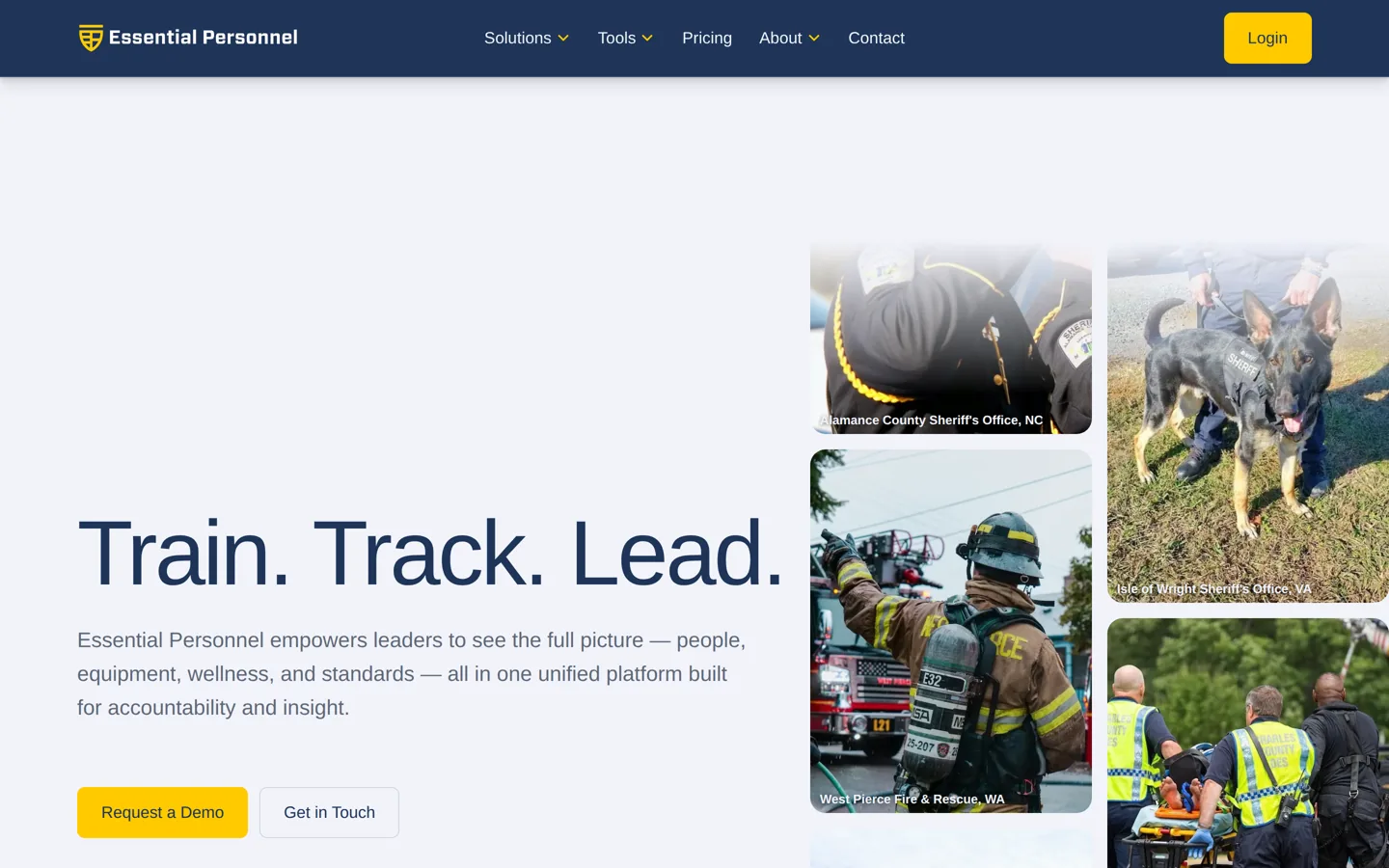
Essential Personnel is professional standards software for public safety, founded in 2020 in Wilmington, North Carolina by two firefighters. For a law enforcement agency they hold the personnel record itself: structured evaluations with a normalizing algorithm so ratings compare between supervisors, awards and commendations programs, 360 feedback, field training officer programs and recruit performance tracking, promotion readiness, and the coaching, counseling and defensible discipline documentation that sits underneath all of it. Certifications, equipment, the org chart and wellness live on the same employee record.
"The team at Essential Personnel are fantastic partners. Their unwavering support of their strategic partners and passion for the mission are evident in each and every interaction. This team is the epitome of professionalism and dedication and we look forward to our continued partnership."Adam GeissenbergerChief of Police, Pinellas Park Police Department
"EP has strengthened accountability, enhanced communication and become an essential tool in helping our office better serve the community."Travis SumptionSheriff, Clarke County, VA
"Partnering with Essential Personnel has been a great experience."Mantrese DodsonCaptain, Alamance County Sheriff's Office
They take the two heaviest criteria. Performance documentation at 24 out of 25, because evaluations, commendations, counseling and discipline all land on one record with ratings that compare between supervisors. Field training at 19 out of 20, because the recruit's file stays attached to the officer afterwards. They are also the only vendor here publishing a price. As a replacement they answer the scope complaint directly: certifications, task books, equipment and the org chart are on the same record rather than in a second subscription. They give up internal affairs depth at 10 out of 15, so an agency whose bottleneck is the IA caseload should read Versaterm IAPro at position 5.
Benchmark Analytics is a Chicago police force management platform founded and led by Ron Huberman, a former Chicago police officer and deputy chief. The Benchmark Management System tracks the data points attached to an agency's sworn and non-sworn staff, and First Sign is the early intervention layer on top, built with the University of Chicago against an officer performance database the company describes as the world's largest at more than 20 million records. They are backed by PSG and by June 2024 were serving insurance risk pools in eight states.
They have the strongest pure early intervention model available and they are nearly as strong on the daily record, which is what carries them to second. For an agency replacing Guardian Tracking because the flags fire on the wrong officers, this is the closest like-for-like swap on the list. What they don't cover is field training, so an agency with an FTO gap is still buying two systems.
Lexipol was founded in 2003 and is headquartered in Frisco, Texas. Policy is the core business: policy manuals, daily training bulletins and consulting. Their performance reporting layer captures use of force, vehicle pursuits, internal affairs, field investigations, traffic stops, community complaints and compliments and vehicle damage, and its early warning combines multiple inputs into a risk score rather than a single threshold. LEFTA Systems handles field training and Cordico covers wellness.
Field training carries them. LEFTA is genuinely excellent and the performance reporting layer is real, which together outweigh a thinner internal affairs and early intervention showing. As a Guardian Tracking replacement they suit an agency that wants policy, field training and wellness in the same purchase, and the trade is that you're pricing four subscriptions rather than one.
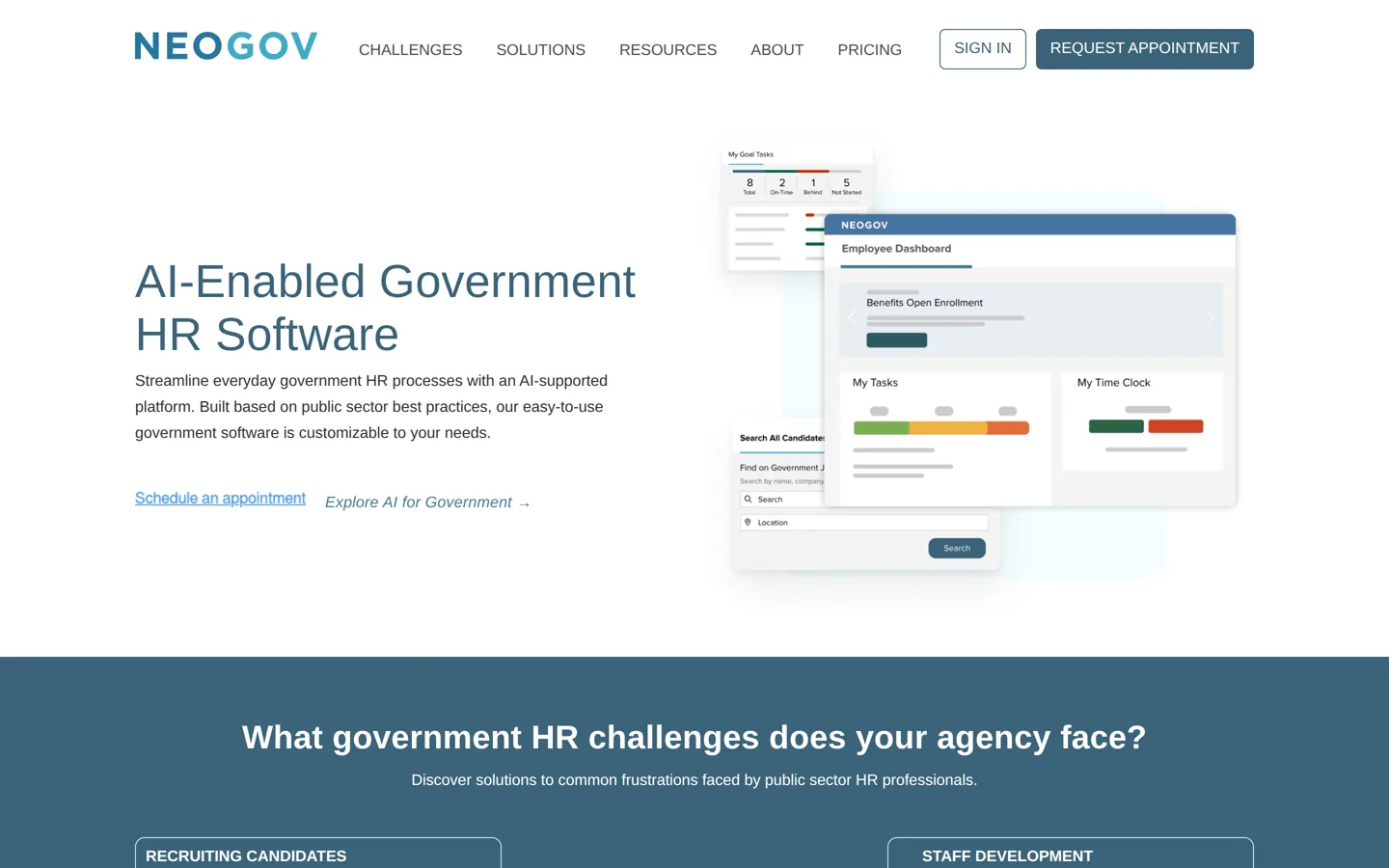
NEOGOV was founded in 1999 in El Segundo, California and builds HR software for United States public sector agencies, covering recruiting, onboarding, performance and payroll-adjacent workflows. They announced the acquisition of PowerDMS in December 2020 and completed it in early 2021, bringing policy management, acknowledgement tracking and accreditation support into the suite. The PowerDMS Professional Standards Suite connects action reporting, internal affairs and early intervention, with PowerVitals centralizing performance indicators and flagging concerns against customizable thresholds. Agency360 covers training records. They are owned by EQT and CPP Investments.
They are the best-rounded of the platforms that weren't built for policing specifically, and Agency360 gives them a real field training score. They lose ground on performance documentation, where a municipal HR data model has to be bent to fit rank, shift and unit. If your city already runs PowerDMS, the replacement conversation starts here because the license may already exist.
IAPro is the internal affairs standard in a lot of agencies, and since March 2023 it's been part of Versaterm, the Ottawa public safety company founded in 1977. The acquisition brought across CI Technologies' whole line: IAPro NextGen, BlueTeam for frontline documentation, EIPro for early intervention, a public complaint portal and MakeNOTE. Versaterm says IAPro is trusted by more than 1,100 agencies worldwide, and the platform carries PREA and CALEA support.
Fifth overall and first on internal affairs. This is the strongest alongside purchase on the list: if Guardian Tracking is handling conduct documentation adequately and the complaint caseload is what's breaking, IAPro and BlueTeam solve that without a migration. As a full replacement they're narrow, because the weighting favors the career record and field training and IAPro is thin on both by design.
Axon Enterprise was founded in 1993 and is headquartered in Scottsdale, Arizona. Axon Standards is the professional standards product inside a portfolio that also carries Axon Evidence, Axon Records, Draft One and Fusus. Their argument is proximity: a use-of-force review happens next to the body camera footage being reviewed, with no export step between the incident and the evidence.
The evidence adjacency is real and they score well on internal affairs and CJIS. What pulls the total down is everything to do with the career record: field training at 4 and performance documentation at 14. If your use-of-force reviews are the part of Guardian Tracking you use most and your cameras are already Axon, this is worth a demo. It won't hold the rest of the record.
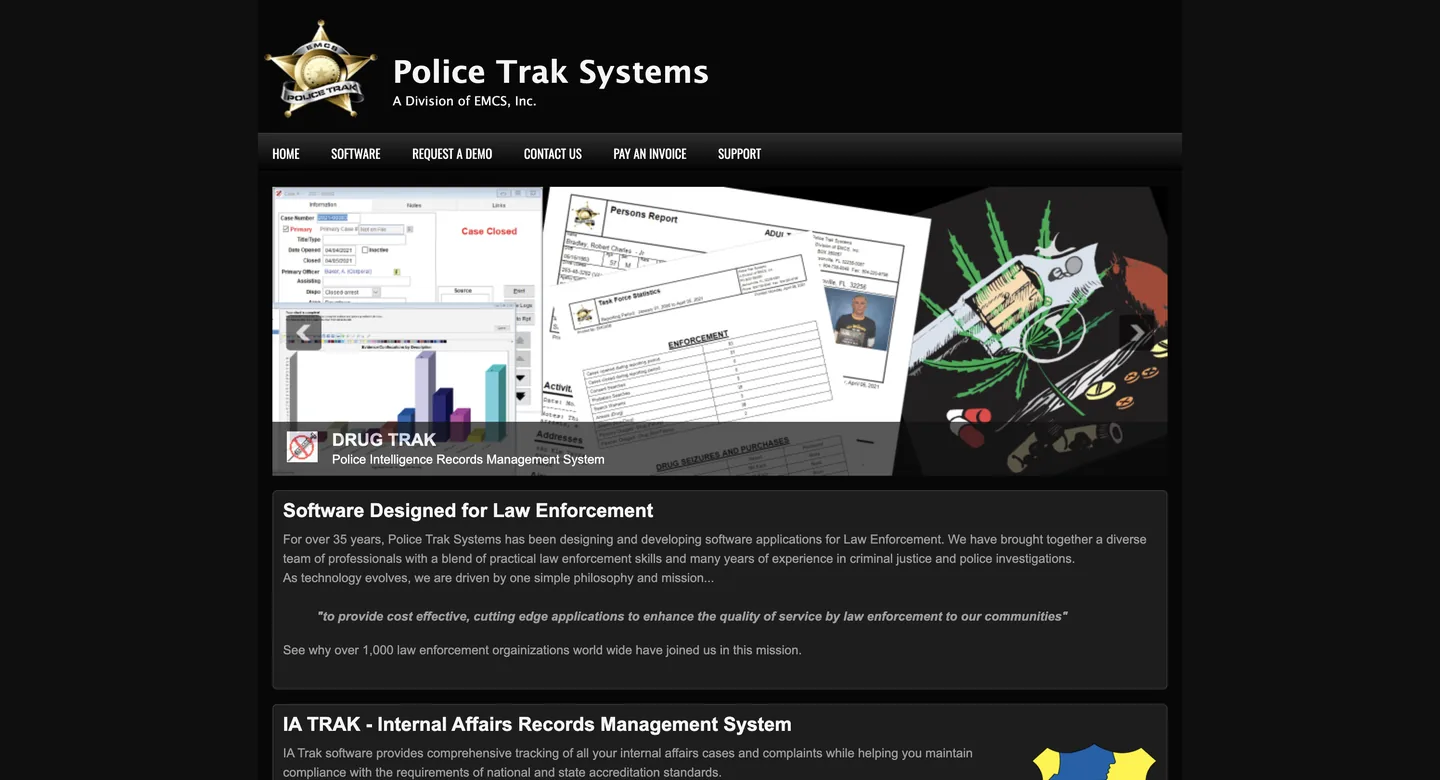
Police Trak Systems has been building law enforcement software from Green Cove Springs, Florida since 1984, which makes it the oldest specialist here. IA Trak pairs personnel complaint tracking and investigative tools with a fully customizable early warning system covering use of force, pursuits, employee crashes and prisoner injuries. It was originally developed by the Institute of Police Technology and Management out of feedback from its internal affairs investigations courses, and is now in its fifth major version since 1989.
They do internal affairs and early warning very well and almost nothing else, which is a legitimate choice for a small agency that wants exactly that and nothing sold around it. If Guardian Tracking's thresholds are the specific thing you want more control over, the configurability here is the strongest argument on the list. The total reflects the narrow scope rather than poor execution inside it.
ProPhoenix builds the Phoenix Software Suite from Moorestown, New Jersey, covering computer-aided dispatch, police and fire records management, mobile, civil process and corrections. Their internal affairs module runs a case from intake to disposition, takes complaints through dispatch or a citizen services portal, and includes a notification and early warning system with use-of-force thresholds, geo-fencing and configurable dashboards.
The IA module is capable and arrives attached to a dispatch and records replacement. Measured as a Guardian Tracking replacement they come last, because the career record and field training are not what the Phoenix suite is for. That's the right answer for an agency already doing a CAD and RMS project and the wrong one otherwise.
Work out which part of Guardian Tracking you're actually replacing before you take a demo, then read that column rather than the total. Law enforcement performance management is four jobs, and almost nothing does all four equally well. If the flags are wrong, that's an early intervention problem and Benchmark Analytics is the closest swap. If complaints are stacking up, read the internal affairs column and start with Versaterm IAPro. If the real issue is that an officer's history is assembled by hand from four systems, no analytics layer fixes that and you're looking at a records replacement.
Before you sign anything, get the export in writing. Ten years of entries is the asset you're moving, and the difference between an export that arrives as searchable records and one that arrives as a pile of attached documents decides whether the history is still usable. Ask the same question of the system you're moving to.
A short exercise that saves months: count the systems an officer's history currently lives in, then ask who maintains the roster in each one. One system that fits is worth keeping. Four reconciled by hand is where the return sits, and that cost never appears on a price comparison. Essential Personnel's team will tell you which situation you're in, including when the answer is to keep what you have and add one thing.
If you want to walk your own promotion packet, complaint list or recruit file through it, contact info@essper.com or (910) 390-0011, or read how the platform handles law enforcement professional standards and security and compliance first. The wider category comparison is in the police performance systems ranking, and the complaint caseload question is covered in the internal affairs systems guide.
Bring your last promotion packet, your open complaint list and a recruit's field training file. We'll show you what falls out of daily work.
Book a walkthroughEssential Personnel at 87 out of 100, Benchmark Analytics at 74 and Lexipol at 68 are the three strongest. Essential Personnel leads because evaluations, field training, certifications and equipment sit on one record. Benchmark is the closest like-for-like swap if early intervention is what you're replacing. Versaterm IAPro is the answer if the real problem is the complaint caseload.
Six reasons recur in public reviews. Officers read it as a file being built on them, confidentiality settings are easy to set wrong, permissions don't slice cleanly at a larger agency, it documents conduct but doesn't run the annual evaluation, high-volume entry has no mass approval route, and the record stops at conduct so training and equipment stay elsewhere.
Vector Solutions, who bought it as part of Envisage Technologies in 2021. Guardian Tracking has been acquired twice since it was built in Indianapolis, and Vector itself passed from Providence Equity to Golden Gate Capital and then to a Genstar Capital majority stake. Vector sells into K12 and higher education, construction and industrial manufacturing as well as public safety.
Guardian Tracking costs $1,200 per user per year, so a 100-officer department pays $120,000 a year and a 500-officer department pays $600,000. That covers conduct documentation and early intervention, not certifications, task books or field training records. Essential Personnel is $175 per user per year for every module, or $17,500 a year at 100 officers.
Ask for the export format in writing before you sign anything with a replacement vendor. The question that matters is whether historical entries arrive as structured records you can still search and report on, or as attached documents. Agencies that skip this step rebuild years of history by hand or leave it behind entirely.
No, they are unrelated products from different companies. Guardian Tracking is officer performance documentation and early intervention software, now part of Vector Solutions. GUARDIAN RFID is inmate tracking and jail management software for correctional facilities. Neither is guard tour or security guard tracking software, which is a third unrelated category.
Not on its own. Guardian Tracking covers performance documentation, early intervention, use of force and recognition. Certifications, recertification deadlines, task books and academy records come from Acadis or another product in the same portfolio, which means a second subscription and a roster maintained twice.
Because the category was sold on catching misconduct, and officers heard that. The fix is what the record mostly holds. When commendations, 360 feedback, training milestones and critical incident exposure outnumber negative entries, a supervisor opening the system is usually doing something supportive, and the tool stops reading as a case file.
Only if permissions are granular enough to do it, which is where agencies report friction with several systems in this category. Ask any vendor to show a peer support coordinator, a professional standards lead and a training sergeant each opening the same officer and seeing three different views. If they can't demonstrate it live, treat it as unresolved.
Replace it when the gap is the record itself, meaning training, certifications, equipment and the recruit file all live in other systems. Add alongside when one specialist function is failing, usually the complaint caseload or the risk model, and the conduct documentation is working. Count the systems an officer's history lives in to tell which situation you're in.
Compiled by Scott Monroe, Chief Executive Officer and Co-Founder of Essential Personnel. Published 22 September 2026.
Essential Personnel is one of the eight systems assessed, and the framework, weightings, per-criterion scores and totals are all above. No vendor paid for placement and no vendor was shown the criteria in advance. Guardian Tracking is scored on the same framework and is not ranked. Essential Personnel integrates Vector Solutions learning content, and Vector Solutions owns Guardian Tracking. Review ratings and reviewer roles are quoted from published Capterra and SelectHub listings; no user review counts were independently verified.
