
Best practices for tracking critical incidents and firefighter wellness
Statesville Fire Department in North Carolina ran two pediatric fatalities within a few weeks of each other. Because every critical incident was logged against the members who responded, the department saw quickly that the same crew had been on both calls, and their peer support team reached out with that in mind. Before they tracked incidents, details traveled by word of mouth, and a pattern like that could easily have gone unnoticed.
That's why you track it. Firefighter wellness programs usually have the pieces: a peer support team, a clinician, an employee assistance program. What they're missing is a reliable record of who saw what, and a way to act on it. This guide sets out the practices that work, in the order to put them in place, for fire chiefs, health and safety officers and peer support coordinators.
The short answer: record every incident against every member, then act on the pattern
Agree in advance what counts as a critical incident, and let any member declare one. Record it against every member on the call during the same shift. Set thresholds so repeated exposure triggers outreach, route those alerts only to peer support and clinicians, and document the follow-up. Track hazardous exposures for each firefighter's whole career, and tie it all to your annual medical program.
None of this replaces critical incident stress management, a clinician or an employee assistance program. Tracking tells you who to check on and when, and shows that you did.
Why tracking matters for firefighter mental health and wellness
Firefighter wellness depends on reaching people before they ask, because the members carrying the heaviest load are often the least likely to raise a hand. A 2018 white paper from the Ruderman Family Foundation counted at least 103 firefighter suicides in 2017, against 93 line of duty deaths the same year. Treat firefighter mental health as a line of duty risk.
Three things go wrong without a record:
- Nobody sees the total. One fatal call gets noticed. A member's fourth this quarter usually isn't, because nobody is counting across shifts and stations.
- Outreach depends on memory. A captain who knows the crew rotates out, and the context goes with them.
- Exposure history can't be rebuilt. Presumptive cancer laws and workers' compensation claims ask what a member was exposed to over decades, and paper run reports rarely answer that.
The U.S. Fire Administration and the IAFF behavioral health program both treat behavioral health as a core part of firefighter wellness. Tracking is how a department turns that into action for a specific member.
1. Define what counts as a critical incident before the next one
Write a short list of incident types that always count as critical, agree it with your peer support team, and add a rule that any member can mark an incident as critical for themselves. The list makes recording consistent. The self-declared rule catches the call that hit one person hard for reasons nobody else could see.
Here's a starting list. Adjust it with your peer support team and your clinician.
| Always critical | Often critical | Critical for one member |
|---|---|---|
| Line of duty death or serious injury to a member | Prolonged extrication with a conscious patient | A patient who resembles the member's own child or parent |
| Pediatric fatality | Violence against crews on scene | A call at a place the member knows personally |
| Mass casualty incident | Fatal fire with entrapment | A call that echoes an earlier one for that member |
| Suicide or death of a coworker | Failed resuscitation after a long effort | Anything a member asks to have recorded |
Keep the categories plain and the list short. If recording one takes judgment calls, it won't happen at three in the morning.
2. Write the critical incident report the same shift, against every member
A critical incident report should be opened before the crew goes off shift and should name every member who responded, not just the officer in charge. Each member's record then carries the incident, so their history follows them across shifts, stations and promotions.
The report doesn't need clinical detail. It needs enough for outreach and for a reliable history:
| Field | Why it matters |
|---|---|
| Date, time and incident number | Links the critical incident report to the run report in your records management system |
| Incident type from your list | Makes thresholds and reports consistent |
| Every member on scene and their role | Puts the event on each person's record, not just the captain's |
| Hazardous exposures, if any | Feeds the career exposure record in practice 6 |
| Who was notified, and when | Shows the outreach started |
| Follow-up contacts and dates | Proves the response actually ran |
Avoid entering the same incident twice. If supervisors write it in the records management system and again in a wellness log, the second one stops within a month. Pull from one into the other where you can.
3. Watch cumulative load with thresholds, not just single calls
A single bad call gets attention. The pattern is what gets missed: the member at their third pediatric call in two months, or the engine company that's run four fatal fires since spring. Set a threshold, a number of a given incident type inside a time window, that triggers outreach automatically.
Start conservative. Three critical incidents in 90 days is a common place to begin, and a single always-critical event should trigger contact on its own. Watch what fires for a quarter, then adjust. A threshold copied from a much larger department will flag half your roster, and once leaders start dismissing alerts the program loses its value.
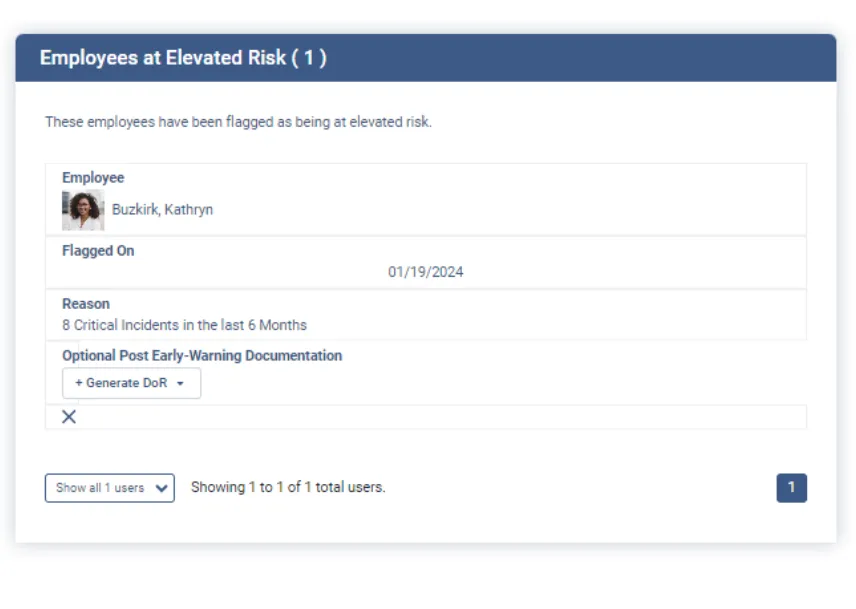
Thresholds can combine signals, too. A member with repeated critical incidents and a sudden run of apparatus accidents or late reports is telling you something neither signal shows alone. Treat that combination as a reason for a conversation, not for discipline.
4. Route alerts to peer support and clinicians, and keep them confidential
Decide who sees critical incident detail before you record anything. Alerts should go to the people who do outreach, such as peer support coordinators, a contracted clinician or a health and safety officer, and not automatically up the chain of command. Members who see their wellness record reach a supervisor stop disclosing.
Keep wellness records separate from discipline and from the personnel file. The first time the system is used, make it supportive, because members will decide what the program is for within a month. The wellness records guide covers keeping these records out of personnel files in more detail.
5. Follow up through critical incident stress management, and record it
Critical incident stress management is a framework of support before, during and after a critical incident, including peer support, defusing, individual contact and referral. Tracking doesn't deliver it. Tracking makes sure it starts on time and records that it happened.
Critical incident stress management isn't the same thing as critical incident stress debriefing, which is one tool inside it. Most departments train their peer support team in a recognized model, often through the International Critical Incident Stress Foundation. Use the record to start the right response for each event:
- Match the peer. Statesville found the best person to reach out was often a member who had been through the same kind of call. A history of who has worked which incidents makes that match possible.
- Record contacts, not content. Log that peer support reached the member and when, and whether a referral was offered. Keep what was said out of the system.
- Close the loop. Schedule a second contact a few weeks out. Firefighter PTSD symptoms often show up later, not the night of the call, and the second contact is where firefighter mental health problems are most often caught early.
Where critical incident stress debriefing fits
Critical incident stress debriefing, a single structured group session after an event, is still widely used in the fire service. Several international health bodies advise against routine, mandatory single-session debriefing and favor psychological first aid and individual follow-up instead. If you use critical incident stress debriefing, keep it voluntary, run it with trained peers, and pair it with one-to-one contact in the days after. Record that the session was offered and who attended, so the critical incident report shows the follow-up ran.
The NIOSH guidance on traumatic incident stress lists the symptoms supervisors and peers should watch for in the weeks after an event.
6. Track exposures for a whole career
Exposure tracking means recording each member's hazardous exposures, such as smoke, products of combustion, chemicals and bloodborne pathogens, against that member for as long as they serve. Cancer claims often depend on exposure history, and a department that logged exposures only in run reports usually can't reconstruct one.
Presumptive cancer laws now cover firefighters across most of the country, and the IAFF presumptive legislation fact sheet shows how widely the qualifying criteria vary. Documented carcinogenic exposure is one of the criteria states use. NFPA 1500 includes exposure reporting and record keeping in a fire department's occupational safety and health program.
Make exposure tracking a habit rather than a project. Good exposure tracking takes a minute per member per call:
- Record the exposure on the incident, for every member present, the same shift.
- Note what was done about it: gross decon, gear swapped, shower within the hour.
- Keep the record with the member, not the incident, so it moves with them.
- Encourage members to enroll in the National Firefighter Registry for Cancer run by NIOSH, which studies cancer risk across the fire service.
The Firefighter Cancer Support Network publishes prevention guidance you can share with members. Exposure tracking also connects to gear: the turnout gear and SCBA records guide covers tracking the cleaning and inspection of what each member wore.
7. Connect tracking to your NFPA 1582 medical and fitness program
Incident and exposure records are most useful in front of the physician doing the annual exam. The occupational medical requirements long known as NFPA 1582 are now part of NFPA 1580, which in its 2025 edition consolidated NFPA 1581, 1582, 1583 and 1584 into one standard for emergency responder occupational health and wellness. Most departments still call it NFPA 1582, and the annual medical evaluation it describes is the right moment to review a member's exposure and incident history.
The IAFF-IAFC Wellness-Fitness Initiative pairs that medical program with fitness, behavioral health and data collection. Under NFPA 1582 and the WFI, medical results stay confidential with the physician. Your tracking system should hold the event history and the fact that an exam happened, not the clinical findings.
8. Publish resources and measure the program
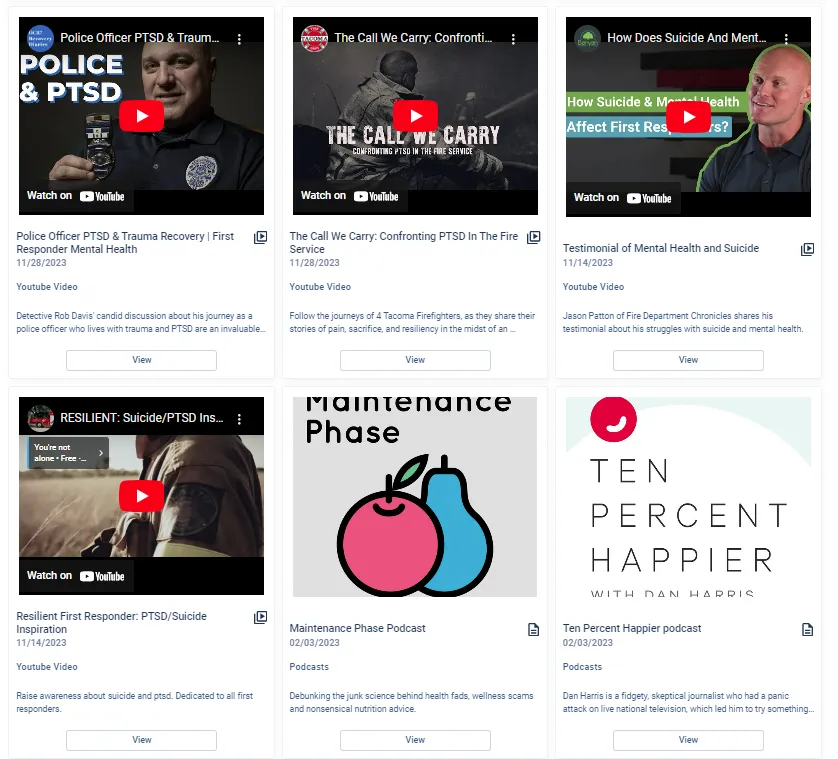
Put your peer support contacts, clinician details, employee assistance program number and trusted firefighter mental health material in one place members can find from any station. The NVFC Psychologically Healthy Fire Departments toolkit is a good source for what to include.
Then measure it. A firefighter wellness program you can't measure is hard to defend at budget time. Report these each quarter:
- Critical incidents recorded, by type and station.
- Median time from a critical incident report to first peer support contact.
- Members who crossed a threshold, and how many were contacted.
- Exposure records per structure fire, which shows whether logging is happening.
- Annual medical exams completed against the roster.

What it looks like in practice: Statesville and Hendersonville
Statesville Fire Department had no formal way to track critical incidents before they adopted Essential Personnel; they relied on their peer support network and word of mouth. They now record incidents against each member, use threshold alerts to spot patterns like the repeated pediatric calls, and contract with clinicians when a series of events calls for it. During reaccreditation, the Center for Public Safety Excellence commission cited their critical incident tracking as an industry best practice.

"Having timely notifications and insights at our fingertips is one of the most significant benefits of EP. Using threshold alerts, it enables the department to keep the health and wellbeing of our team as one of our top priorities."
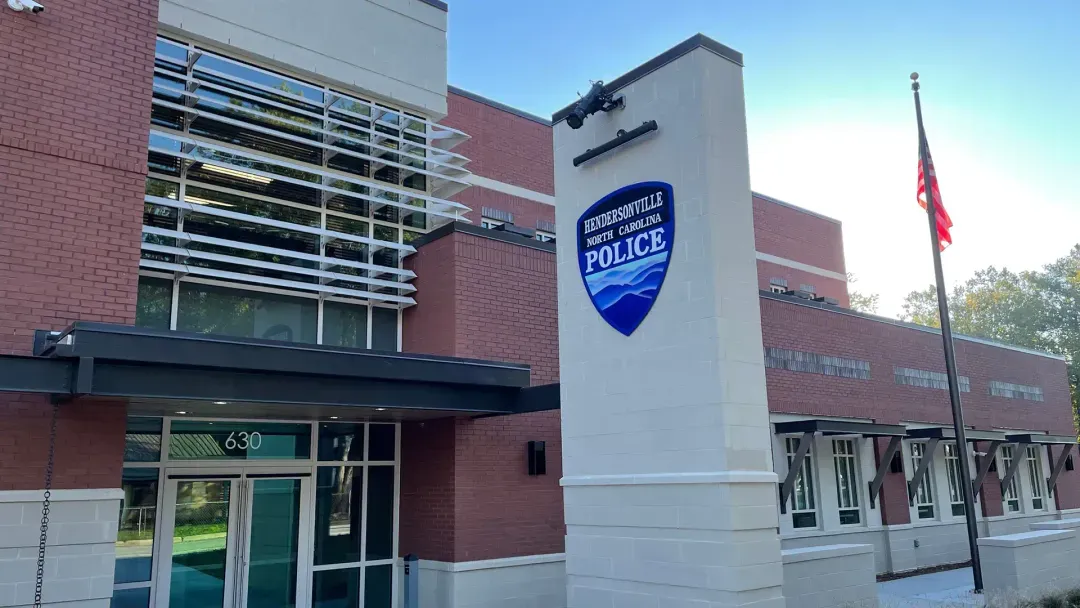
Deputy Chief Kyle Bell, Statesville Fire DepartmentThe same approach works in law enforcement. Hendersonville Police Department in North Carolina tracks traumatic calls, use of force and other incidents in one system, sets threshold alerts for critical incidents, and uses them to make targeted referrals to critical incident stress management teams, chaplains and peer support.
What tracking can't do for firefighter PTSD
Tracking isn't treatment, and it isn't a diagnosis. Firefighter PTSD is diagnosed and treated by clinicians, ideally ones who know the fire service. A wellness record can show that a member has been to five fatal calls this year; it can't tell you whether they're developing firefighter PTSD, and it shouldn't try. Keep clinical records with the clinician. Use the tracking record to prompt a conversation, a schedule change or a referral that wouldn't otherwise have happened. If it gets a member with firefighter PTSD symptoms to a clinician sooner, it's working. The same applies to firefighter PTSD screening tools: keep the results with the clinician, and keep only the fact of the referral in your firefighter mental health records.
How Essential Personnel handles critical incident and exposure tracking
Essential Personnel was founded in 2020 in Wilmington, North Carolina by two firefighters. Their Safety and Wellness suite tracks five event types against every member: injuries, use of force, traumatic calls, motor vehicle accidents and exposures. Together they build a wellness profile that shows each person's history over months and years.

Critical Incident Alerts
Notify designated people when a traumatic or critical incident is recorded, and any member can mark an incident as critical for themselves.
Automated Alert Triggers
The department sets the number, type and time window of events that trigger an alert, and thresholds can include corrective documents of record.
Specialist Role Permissions
Only designated people see critical incident detail, including clinicians or wellness providers from outside the department.
Incident and Case Management
Approval workflows, records management system integration, and incident data auto-filled into the PDF your state requires for workers' compensation.
Because the wellness profile sits on the same employee record as training, certifications and issued gear, a health and safety officer sees one person instead of five systems. Lessons learned from an incident review can be published through Guidance, so the next crew at that station reads them. Specialist Role Permissions keep the detail away from anyone who isn't meant to see it.
It's simple to buy and run. Safety and Wellness is published at $40 per user per year on the pricing page, or $175 per user for the full platform, with a one-time $3,000 startup fee. EP is hosted in AWS GovCloud, CJIS aligned and SOC 2 Type II audited annually, with details on the security and compliance page, and it's available through GSA Advantage, NASPO, Omnia Partners, NCSA and VSA.
The critical incident and exposure tracking comparison ranks the main systems for fire departments, and the fire and EMS overview covers the rest of the platform.
Questions to ask before you buy wellness tracking software
Take this list to every demo
- Record a critical incident against a whole engine company in under two minutes.
- Let a firefighter mark a call as critical for themselves. Who gets notified?
- Set a threshold of three critical incidents in 90 days, and show me who it flags today.
- Show me exactly who can see critical incident detail, and how an outside clinician gets access.
- Show me one member's exposures across a whole career, exportable for a claim.
- Does it pull incidents from our records management system, or do we type them twice?
- Does it fill in our state's workers' compensation form from the incident?
- Can we publish our own peer support contacts and mental health resources?
- Is the price published, and what's the five year total including startup?
If you'd like to map your own thresholds and alert routing, the Essential Personnel team can walk you through it.
Frequently asked questions
Define what counts as a critical incident and let any member declare one. Record each incident against every member on the call the same shift. Set thresholds for repeated exposure, route alerts confidentially to peer support and clinicians, document follow-up, track hazardous exposures for each firefighter's career, and connect the record to the annual NFPA 1582 medical exam.
The date, time and incident number, the incident type from your department's list, every member on scene and their role, any hazardous exposures, who was notified and when, and the follow-up contacts with dates. Leave out clinical detail. The critical incident report exists to start outreach and keep a reliable history for each member.
Critical incident stress management is a framework of support for responders before, during and after a critical incident. It includes pre-incident education, peer support, defusing, individual contact, group sessions and referral to clinicians. Fire departments usually train peer support teams in a recognized model, such as the one taught by the International Critical Incident Stress Foundation.
The evidence is mixed. Several international health bodies advise against routine, mandatory single-session critical incident stress debriefing and favor psychological first aid and individual follow-up instead. Many fire departments still offer debriefing, and members often value it. If you do, keep it voluntary, run it with trained peers, and follow up one to one afterward.
Record each hazardous exposure on the incident, for every member present, the same shift, along with what was done about it. Keep the exposure record attached to the member rather than the incident so it follows them for their whole career. Presumptive cancer claims often depend on documented exposure history, and NFPA 1500 expects exposures to be reported and recorded.
Only the people who do outreach, such as peer support coordinators, a health and safety officer and any contracted clinician. Keep critical incident detail out of the personnel file and away from the chain of command by default. Members stop reporting quickly if they believe wellness records reach supervisors or affect discipline and promotion.
Its requirements now sit in NFPA 1580, which in its 2025 edition consolidated NFPA 1581, 1582, 1583 and 1584 into one standard for emergency responder occupational health and wellness. Many departments still call the annual medical evaluation an NFPA 1582 exam. Medical findings stay confidential with the physician, separate from incident tracking.
Yes. The Essential Personnel Safety and Wellness suite tracks injuries, use of force, traumatic calls, motor vehicle accidents and exposures against each member, builds a wellness profile, and sends Critical Incident Alerts to designated people. Departments set their own alert thresholds, and Statesville Fire Department's tracking on the platform was cited as an industry best practice during reaccreditation.
Know which of your people need a check-in, before they ask
Get your peer support team to the right firefighter sooner, and keep the exposure history your members will need years from now. Talk it through with someone who's worked a shift. Call (910) 390-0011 or email info@essper.com.
About this article
Written by Scott Monroe, Chief Executive Officer & Co-Founder, Essential Personnel. Published 8 October 2026.
Essential Personnel makes the software described here, and the product screenshots are from the platform. The critical incident types and the starting threshold are examples to adapt with your peer support team. Customer details and quotes are taken from the published Statesville Fire Department and Hendersonville Police Department stories. This article is general guidance and isn't medical or legal advice.
