Guide
Your agency already owns the pieces. Policies sit on a shared drive, certifications live in a training officer's spreadsheet, and evaluations arrive once a year on a form somebody retypes. Each part holds up until you have to prove something specific about one person on one date, and then none of them do.
To post policies and confirm acknowledgement, you need software that binds four things together: the individual, the document, the version they were served, and the date. Public safety software built for this publishes a policy to the people it applies to, captures each person's confirmation of receipt, and keeps every superseded version rather than overwriting it. Essential Personnel does that in their Guidance suite, on the same employee record that holds training, evaluations and counseling documentation, so the proof is a query rather than a reconstruction.
This guide is written for the people who carry the consequence when that proof is missing: chiefs, deputy chiefs, training officers, professional standards lieutenants, and the municipal HR directors who support them. It covers what to expect from public safety software in three areas that agencies usually buy separately, and what to confirm in a demo before you commit.
The framing throughout is the record rather than the feature list. A feature demonstration tells you what a product can display. The question that decides a procurement is narrower: two years from now, can you answer a specific question about a specific person on a specific date, and will the answer survive being challenged.
Who is current, who is qualified, when it expires, and where the source certificate is.
Who received which version of which document, and on what date.
What was observed, when it was written down, and who reviewed it.
Centralized training management software gives an agency one live record of who is current, who is qualified, and what the training cost. Certifications carry expiration dates, task books carry sign-offs, and both have to be reportable on demand rather than assembled once a year from memory and email. That single record is what readiness reporting, ISO submissions and accreditation files are built on.
The gap in most departments isn't the training itself. Departments deliver plenty of training. What they can't do is answer a narrow question quickly: who lapses in the next ninety days, which members currently hold the qualifications a special team needs, and where the certificate that proves it actually sits. Those are queries against a record, and the record is the part that is usually missing.
That's why training management software belongs in the professional standards conversation rather than in the training budget alone. A readiness picture you can produce on demand is an accountability instrument. A readiness picture you have to reconstruct is a liability with a six week lead time.
A spreadsheet is a reasonable place to start and a poor place to stay. Certification tracking software exists because a sheet fails in five specific ways, and each one shows up at the worst moment.
The standards those records answer to are not informal. Fire service credentials are written against NFPA professional qualification standards and accredited through Pro Board or IFSAC. Law enforcement training hours are set by state POST bodies working from the model standards that IADLEST maintains. Certification tracking software earns its cost the first time an assessor asks you to evidence a cohort rather than a person, and certification tracking software that can't cite the standard behind each credential leaves you doing that mapping by hand.
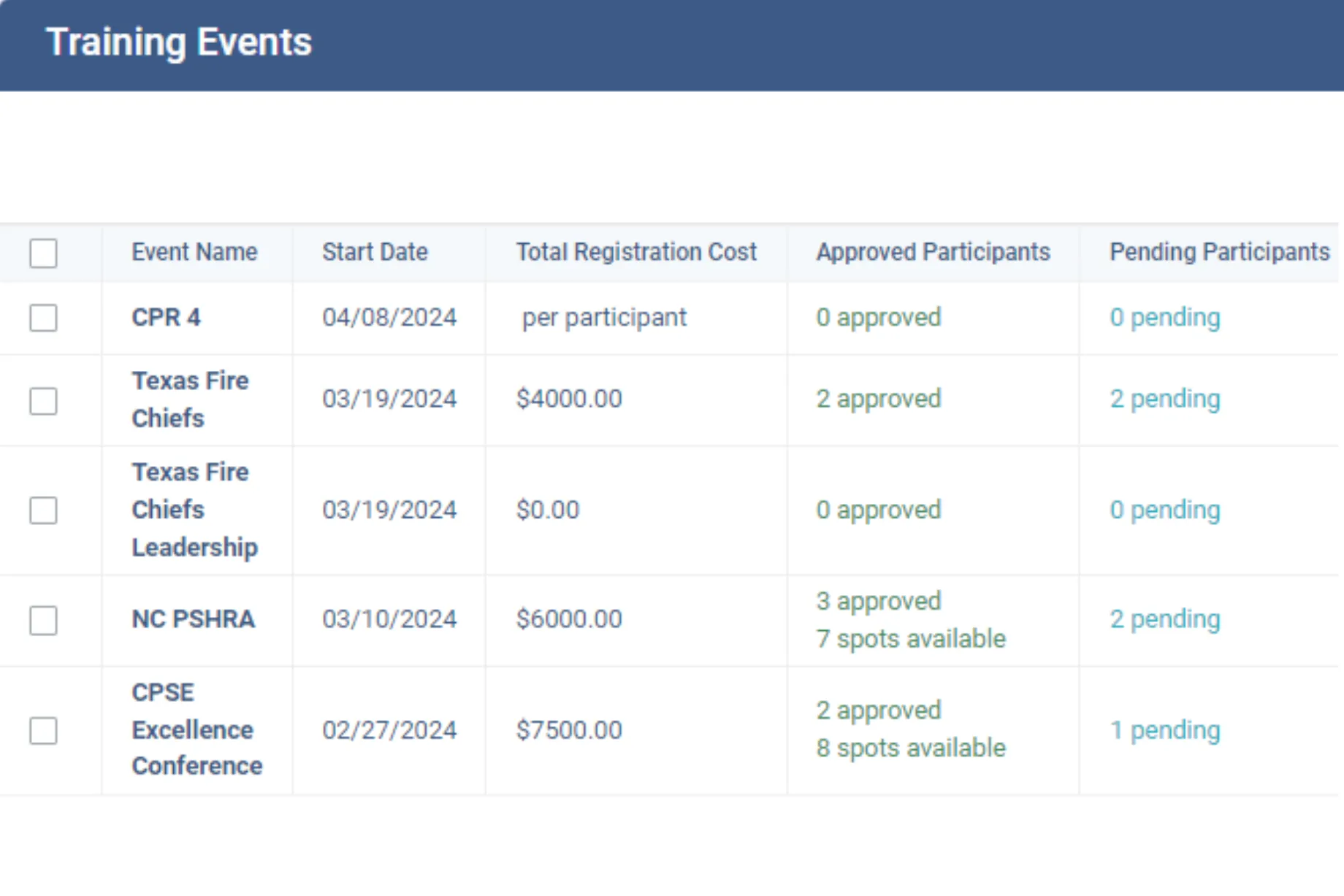
Four capabilities, and most products cover two. Hour and activity logging. Event management with attendance and cost. Certification currency with expiration alerts. Task book tracking. Fire department software that handles course delivery beautifully still leaves a training officer maintaining a certification spreadsheet by hand, which is the work you were trying to remove. Training management software has to close that loop, not hand it back.
The Training module in Essential Personnel splits along those lines. Logbook records hours and activities against custom goals and benchmarks, with identifiers that make categories sortable and reportable. Events tracks training events with attendance and cost and integrates with Outlook and Google Calendar. Certifications tracks credentials, expirations, completions and source documents. Qualifications produces task books, new employee check-offs and specialty equipment check-offs. Those four together are what separates training management software from a course catalog with a report button, and detail on all of them sits on the Talent Management page.
Proficiency tracking is where the training record and the equipment record meet. A member issued an SCBA, a patrol rifle or a thermal imaging camera carries two facts: the assignment, and the check-off that says they're qualified to use it. Essential Personnel holds the first in Equipment Accountability with chain of custody, and the second in Qualifications as a specialty equipment check-off. Automated tracking against those requirements means a supervisor can see at a glance who is issued gear they are not currently signed off on, which is a question no department wants to answer after an incident rather than before one.
The reporting is where this pays back annually. ISO company and driver hours, Center for Public Safety Excellence accreditation evidence and CALEA files are all queries against training data you already capture. West Manatee Fire Rescue used the platform to improve ISO tracking on exactly that basis. The submission still has to be written. What disappears is the six week reconstruction of hours that were recorded accurately at the time and then scattered.
Essential Personnel is the system of record for training rather than a course library, and departments run it alongside whatever course provider they already use. That's why the integrations exist rather than a catalog: Vector Solutions syncs credentialing information, Fire Engineering Training syncs e-learning and instructor-led training into the Logbook, and Synap feeds exam results into a member's profile. If your requirement is online course delivery, you need a provider for that and this is not one. If your requirement is proving who is current, who is qualified and what it cost, that's what this does.
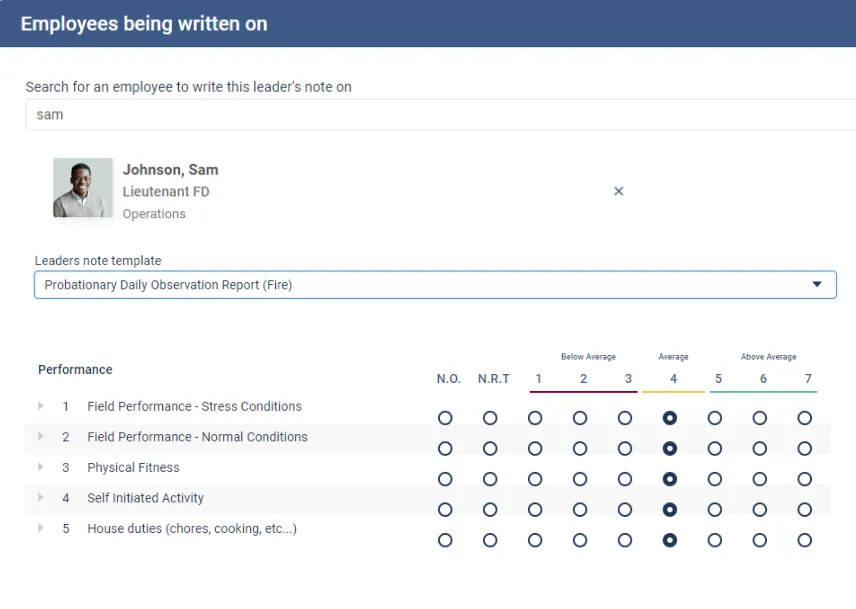
Recruit and probationary tracking is where inconsistency does the most damage, because a probationer's outcome shouldn't depend on which officer assessed them. Essential Personnel runs field training on structured evaluations rather than free text. Leader's Notes carries a field training officer daily observation report template, and progress rolls into Score Reports and Analytics so training staff see a whole class rather than a stack of forms. Carteret County Sheriff's Office modernized its field training program this way.
Mobile access is the item to press on, and Essential Personnel says so themselves. Their own platform page lists mobile access, and specifically whether supervisors can file notes from a phone, among the things buyers should ask about rather than assume, because it isn't documented publicly. That guidance applies to every vendor in this category, not just this one. An FTO writing a daily observation report at the end of a shift is either doing it on the device in their pocket or doing it later from memory, and later from memory is the failure mode the whole system exists to prevent.
So ask for it to be demonstrated on the hardware your field training officers actually carry, on the network they actually have, and get the answer in writing. The same applies to whether a public API exists, what the export formats are, and what happens to your records if you leave. The platform page sets out the full list worth raising.
Digital policy distribution replaces the shared drive with a single published source that records who received which version and when. Integrated performance development replaces the annual form with observations recorded through the year and assembled at review time. Both are the same idea applied to different records: put the evidence in place before the decision it will later be used to defend.
These two usually get bought separately, then land on the same desk. The supervisor who has to prove a member acknowledged a revised use of force policy is usually the same supervisor who has to justify that member's evaluation score, and in most departments those two records live in different systems with different logins and no relationship to each other.
Policy management software publishes a document to your people and proves they received it. For a police, fire or EMS agency the proof is the point, because the questions that arrive later are never about whether a policy existed.
Essential Personnel Guidance handles five content types rather than policy alone. Policies and memos carry direction. Announcements replace the station whiteboard and the group text. Lessons Learned gives an incident debrief somewhere durable to live, which is the one most agencies underuse, since a serious near miss usually produces a good debrief and then evaporates. Research holds the material an agency wants its people to actually read. Each is published with Employee Acknowledgment, which creates a verifiable record of receipt, and with Version Control tracking every revision.
Most agencies evaluating policy management software today run this on email, a shared drive or a binder at each station, and all three fail the same test. Filenames ending in final, final2 and revised are a version history nobody can testify to. The litigation question is what the policy said on the day of the incident, not what it says now, and an agency that has overwritten its policy file cannot answer that at all.
Two limits matter before you compare policy management software vendors. Acknowledgement proves receipt, not comprehension. No policy acknowledgement software can prove somebody understood a document, and what it actually removes is the defense that they never got it. And Essential Personnel is the repository and the acknowledgement layer rather than a policy content business: they don't draft or maintain model policies for your state. If your real problem is the content, keep a content provider. If your real problem is that nobody can prove who read the last general order update, that's the gap this closes.
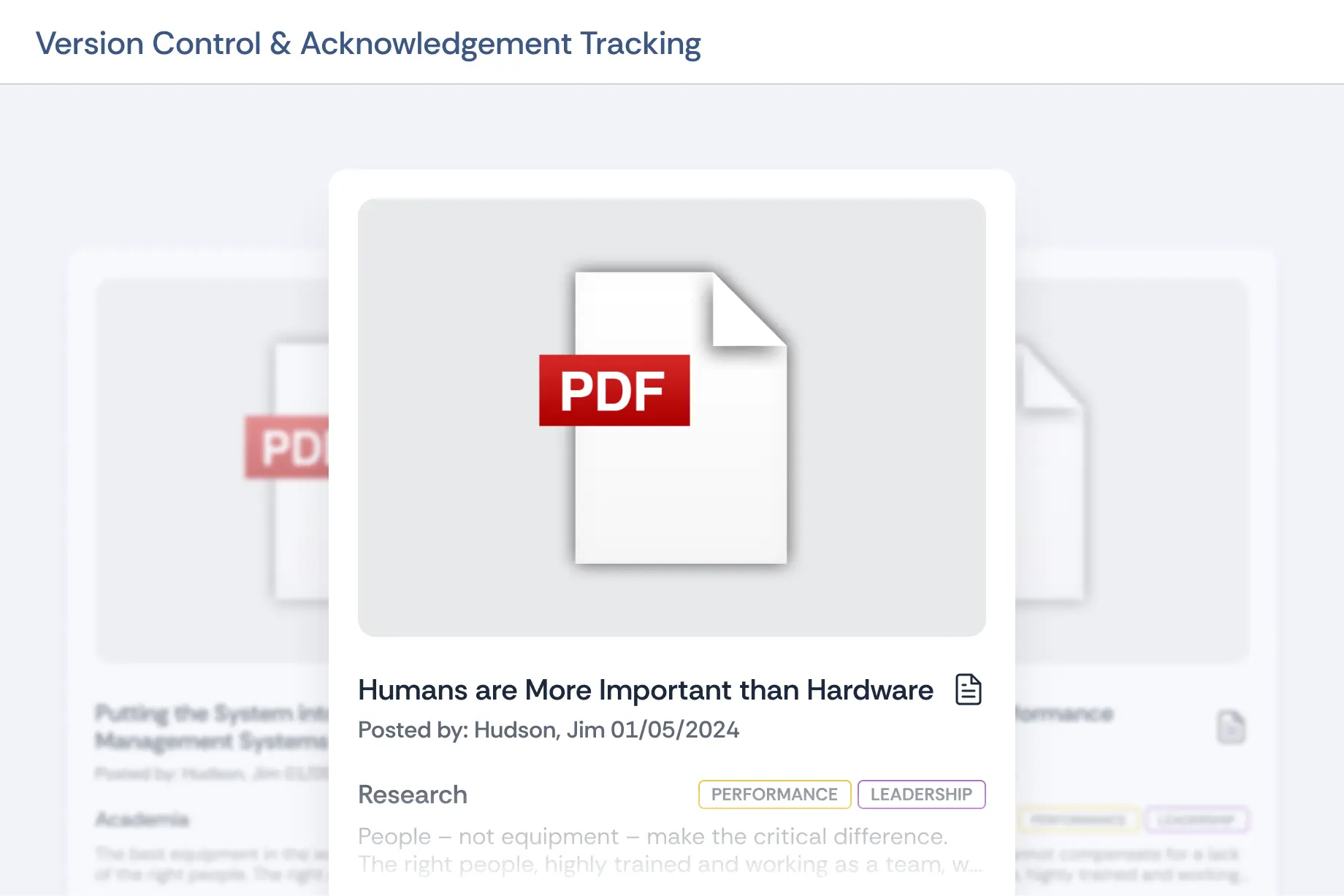
Accreditation is where this stops being theoretical. CALEA and CPSE assessors generally need you to show that a standard is written, issued and received, and proof of distribution is one of the most commonly requested items in a file review. Acknowledgement records and version history give you the second and third of those directly, as a query rather than a scramble through five years of email. Policy management software that can't produce that on request is leaving you to assemble it by hand at the worst possible moment.
Decide your re-acknowledgement rule before you start rather than document by document. Most agencies land on the same one: substantive changes trigger a fresh acknowledgement cycle, administrative corrections don't, and a standards committee decides which is which. Essential Personnel has written about standards committees and how that governance actually works in a department, and bodies such as the IACP and the IAFC publish guidance that assumes something like one exists.
The complaint about annual reviews is rarely that they're missing. It's that they aren't comparable. One supervisor rates everyone a four, another rates the same quality of work a three, and by the time those scores reach a promotion board they carry no information at all. That's the defect performance evaluation software should be bought to fix, and most of it doesn't.
Essential Personnel addresses it directly. Score Reports apply an algorithm that normalizes for hard graders and easy graders, so a rating is read relative to how that supervisor rates everybody. The test for any performance evaluation software is simple: can a promotion board use the output without re-litigating how each supervisor grades. If the answer is no, the scores are decorative, and no amount of form design will rescue them.
The second defect is frequency. A review written in the last six weeks of the cycle captures the last six weeks, which is how a member with a strong year and a rough November ends up with a bad performance review that nobody can defend and nobody quite believes. Data-backed feedback means the score points at dated entries a member can read for themselves, and a disagreement becomes a conversation about the record rather than about the supervisor.
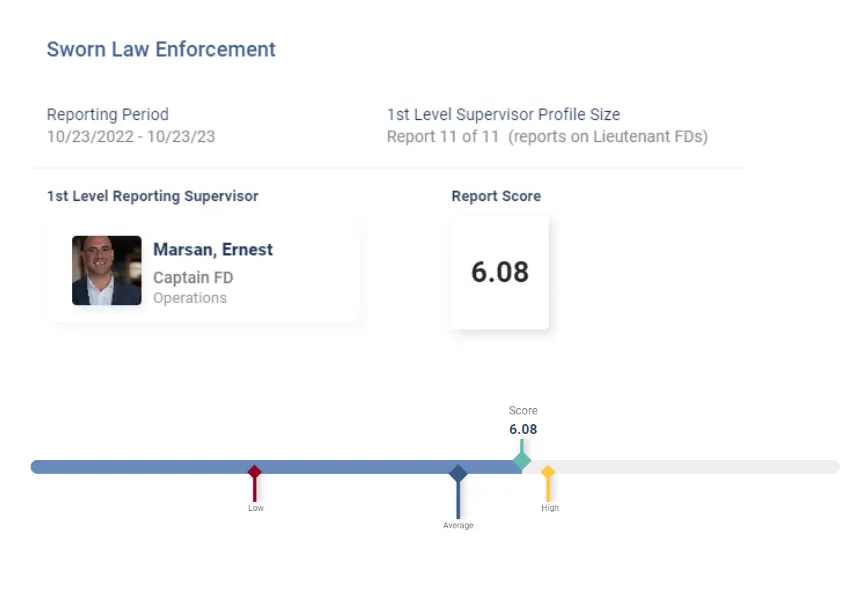
Peer input is the third piece, and it is the part performance evaluation software most often gets wrong in a small agency. In a forty person department, feedback from three peers is often identifiable by tone alone, and once people believe that, honest input stops. Essential Personnel provides 360 Feedback built for confidentiality and transparency, with Analytics rolling responses into an overview rather than surfacing individual comments to be picked apart. Run it on a development cycle rather than attaching it to pay or discipline, and keep the respondent pool wide. The case for 360 feedback holds up when it's configured that way and collapses when it isn't.
Performance management software can't create evidence that supervisors never wrote down. What it can do is make writing it down fast enough that it happens, and consistent enough that it's usable later. That's the practical difference between performance management software and a digital copy of last year's form. That's the whole mechanism behind building receipts through the year.
Leader's Notes is where that happens in Essential Personnel. Supervisors record observations as they occur, using templates for performance improvement plans, instructor reviews, formal counseling and field training daily observation reports. The annual evaluation then assembles from a year of dated entries instead of a fortnight of recall. Southern Pines Police Department took this approach to performance development, and the shape of it is the same in a fire department.
Objectivity follows from that habit rather than from the form design. A supervisor who has recorded twelve observations across a year is describing a pattern. A supervisor with none is describing an impression, and an impression is what an appeal is built to dismantle. Public sector HR bodies such as IPMA-HR have made this point for years, because government employment is structurally different from at-will corporate roles: the decision has to be defensible, not merely recorded.
The last piece is what the data feeds. Analytics reports across performance with a 360 overview, relative value over time and an employee profile summary. Career Paths turns rank and position requirements into published criteria with completion mapped automatically from Training, and Promotion and Retirement Eligibility lets leadership sort for who qualifies now and how many requirements everyone else has left. Performance management software that stops at storing completed reviews leaves the hardest work undone, and this connective part is what agencies value most once it's running. The same records carry across law enforcement, fire and EMS and general municipal HR in a city running all three.
Professional standards record-keeping gives supervisors one structured way to document counseling, corrective action and commendation. Templates make entries consistent between supervisors, routing and approval mean an entry is reviewed rather than filed unilaterally, and everything attaches to the employee profile with a timestamp. Consistency and timing are what decide whether the record holds up later, not volume.
The pattern that fails is almost always the same one: a real problem discussed verbally for two years and documented in the final month. A file assembled after a decision has been made rarely survives scrutiny, and supervisors who each write differently create exactly the inconsistency an appeal is built on.
An employee counseling form inside a software platform shouldn't be a blank text box with a date on it. A standardized employee counseling form is what stops six supervisors producing six different standards of evidence, and it should prompt for all of the following.
Essential Personnel covers that in two places. Leader's Notes provides customizable templates including formal counseling, performance improvement plans, instructor reviews and field training daily observation reports, so supervisors document the same way. Documents of Record handles commendatory, corrective and miscellaneous entries with routing and approval workflows, which is what turns a note into a reviewed record. Running the session itself, and choosing between coaching, counseling and corrective action, is covered in more depth in our guide to structured employee counseling.
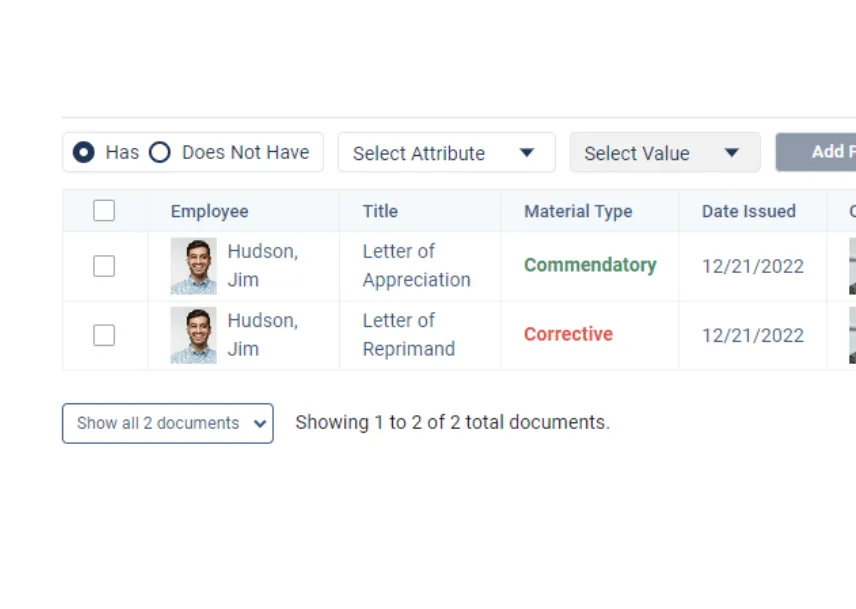
Whatever platform holds your employee counseling form should hold commendation as well as correction. An employee profile that only fills up when something goes wrong reads as a case file, and members treat it accordingly. Awards and commendations routed through the same workflow give the record balance, and recognition is the cheapest retention lever a public agency has.
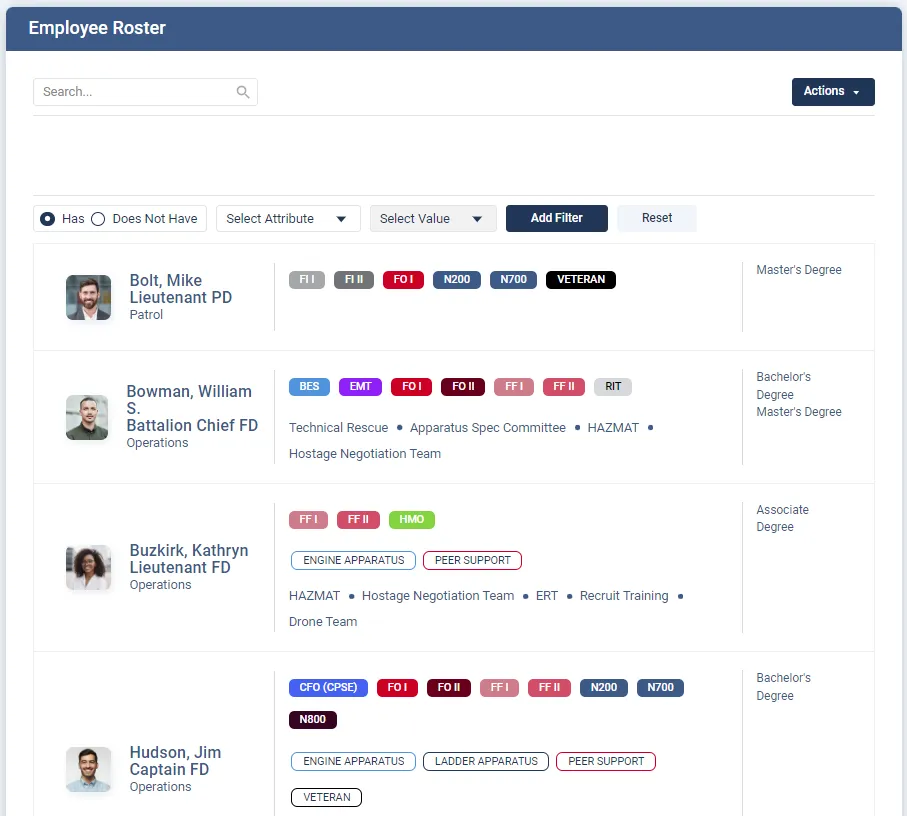
The value of the history shows up at four moments: a promotion process, a public records request, a separation, and an appeal. In all four, what matters is that every relevant document, score, certification and note is attached to one person and retrievable in context. Essential Personnel centralizes that in Employee Profiles, covering personal details, credentials, performance metrics, career history, wellness data, training records and awards.
Retention rules are not yours to invent. Federal EEOC recordkeeping requirements set minimums for personnel records, OSHA recordkeeping governs injury and illness logs, and your state public records statute and collective bargaining agreement will both have something to say. Any professional standards module you buy has to be able to hold records for the longest of those periods and produce them selectively, which is a different capability from simply storing everything forever.
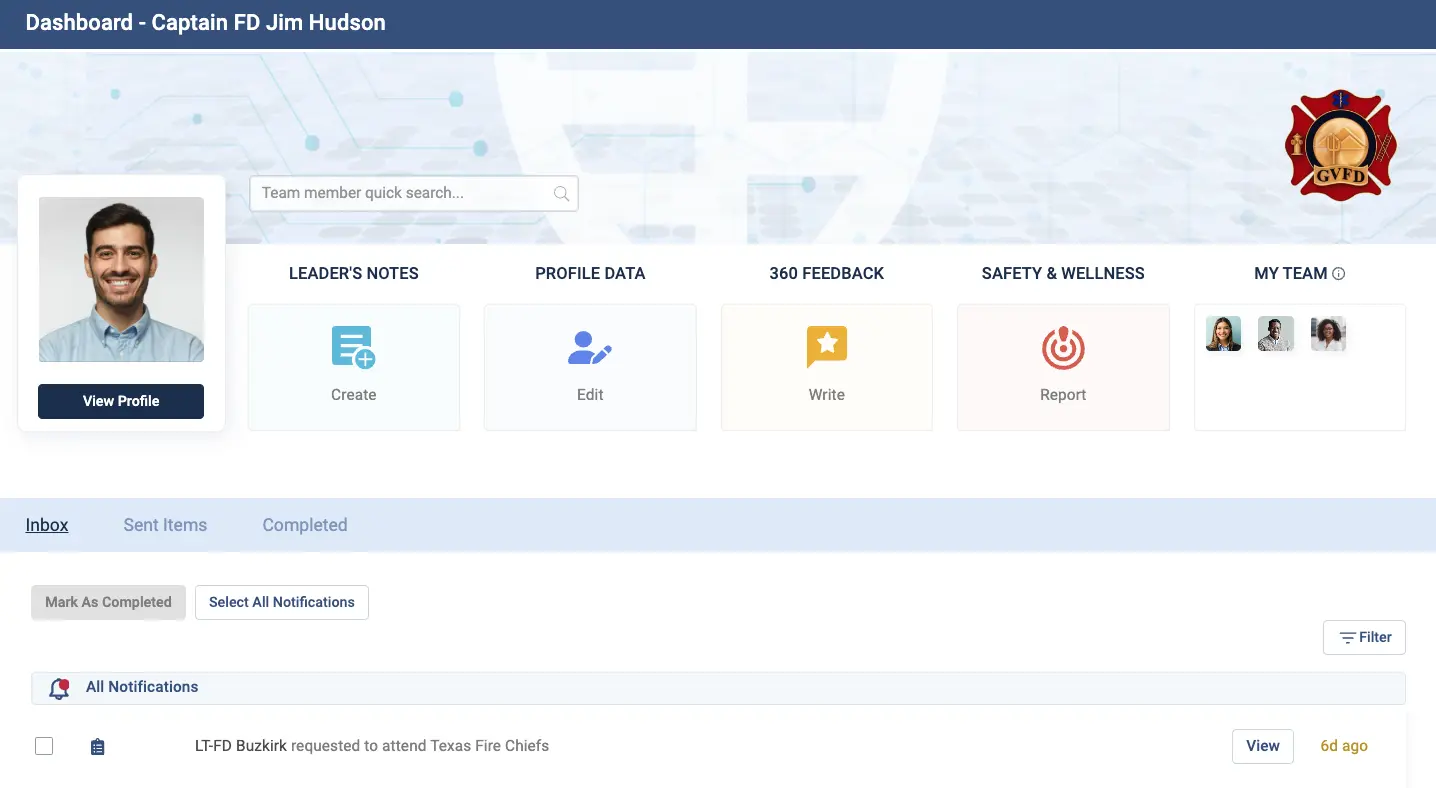
Access control matters as much as retention. Not every record belongs in the personnel file, and wellness and peer support material is the clearest case: agencies keep it separate by design so that seeking help never becomes a disclosable performance fact. Essential Personnel holds that material in Safety and Wellness under role-based access rather than in the personnel record, and the platform runs on AWS GovCloud with SOC 2 Type II attestation and CJIS-aligned controls. The security and compliance page carries the hosting and audit detail.
Essential Personnel publishes what their modules do at a suite level. Performance Development covers 360 Feedback, Leader's Notes, Score Reports, Documents of Record, Awards and Analytics. Case Management covers internal affairs, accidents, injuries and critical incidents. Field-level detail below that, including whether a case record holds witness statements and incident summaries as structured fields, isn't documented publicly for any vendor in this category, so treat it as a demo question rather than a specification.
Ask those before signing rather than after. The gap between what a buyer assumed and what a platform actually delivered almost always sits in one of those seven answers.
| Record | Manual process | Integrated system | The question it has to answer |
|---|---|---|---|
| Certifications and task books | Spreadsheet with no expiry logic, certificates in folders, task books on paper | Expiration alerts, source documents attached, task book sign-offs recorded incrementally | Who lapses in ninety days, and where is the certificate |
| Policy and acknowledgement | Email or shared drive, filenames ending in final and revised, no receipt | Published source with acknowledgement per person and every superseded version retained | Which version did this person see, and on what date |
| Performance evaluation | Annual form written from recall, scores that mean different things by supervisor | Dated observations through the year, normalized scoring, analytics across the roster | Can a promotion board use this without discounting it |
| Counseling and corrective action | Free text notes, no template, no review, filed by the author alone | Templated entries with routing and approval, timestamped to the employee profile | Was this contemporaneous, consistent, and reviewed |
| Issued equipment | Assignment list separate from the qualification to use the item | Chain of custody joined to specialty equipment check-offs on one record | Is anyone carrying gear they are not signed off on |
Buying all five at once is rarely the right move, and public safety software of this kind is usually sold by suite for exactly that reason. Essential Personnel sells their suites separately, from $20 to $85 per user, with the bundled Total Solution at $175 per user and a one-time $3,000 startup fee covering onboarding, support and training, and figures are on the pricing page. Start where the pain is measurable. Agencies that adopt one suite at a time use it; agencies that roll everything out in one quarter usually use it in one corner.
You have three broad options. A policy content provider that supplies state-specific policy with a platform around it. A dedicated policy and accreditation platform strong on document workflow and file management. Or a professional standards platform where policy acknowledgement sits next to training, performance and conduct on the same employee record. Essential Personnel is the third of those: Guidance publishes policies, memos, announcements, lessons learned and research, Employee Acknowledgment creates a verifiable record of receipt, and Version Control retains every superseded revision. Judge any of them on the record it leaves behind rather than the workflow it shows you in a demo.
The one that holds your whole employee record in one place rather than the one with the most modules. A platform with forty features and five separate rosters has solved nothing, because reconciling those rosters becomes somebody's standing job. The practical test is whether one screen shows everything about one person: credentials, evaluations, policy acknowledgements, issued equipment, conduct and wellness. Public safety software is worth judging on that test alone. Essential Personnel is built around that single record, hosted in AWS GovCloud with SOC 2 Type II attestation and CJIS-aligned controls, and available through GSA Advantage, NASPO, Omnia Partners, NCSA and VSA.
Five things generic HR systems rarely model: rank and sworn status, certifications with expiry dates tied to state POST requirements, field training and probationary evaluation, policy acknowledgement with version history, and documentation that survives challenge. Add comparability across supervisors, because a promotion decision that rests on scores nobody trusts is a grievance waiting to be filed. Confirm the hosting and compliance posture separately, since criminal justice information carries obligations an ordinary HR platform was never designed to meet.
Four, and most products cover two. Hour and activity logging with categories you can report on. Event management carrying attendance and cost. Certification currency with expiration alerts and the source document attached. Task book tracking that records incremental sign-offs. The test is whether your annual reporting falls out of daily work: if somebody has to assemble the ISO or accreditation submission from scratch each year, the software is not doing its job however good the course library is.
Because supervisors are rating against their own internal scale rather than a shared one. One rates nobody above a four, another starts at four, and the same quality of work lands two points apart depending on who watched it. Normalization corrects for that by reading a rating relative to how that supervisor rates everybody, which is what lets a promotion board compare a patrol sergeant's people with a detective sergeant's. Without it you are comparing graders rather than officers, and everyone in the room knows it, which is why scores quietly get discounted.
Judge the category on three capabilities rather than on brand. Does it normalize scores so a promotion board can use them. Does it support continuous documentation rather than an annual form. Does it connect performance to the decisions it should inform, meaning promotion, assignment and development. Essential Personnel covers all three through Score Reports, Leader's Notes and Career Paths, with Analytics reporting across them. Performance evaluation software that only stores completed reviews leaves the agency doing the integration by hand, and performance management software bought on module count rather than on those three capabilities tends to end up unused.
On the same employee record, because a counseling entry is usually about a standard the member was issued and trained against. When those three live in separate systems, proving the sequence means pulling from three exports and hoping the dates line up. When they live together, the policy version the member acknowledged, the training that covered it and the entry documenting the shortfall are one query. That sequence is what a reviewing body actually asks for, and it is the practical argument for consolidating rather than buying the best individual tool in each category.
Most vendors in this category are quote only. Essential Personnel publishes their figures: individual suites run from $20 to $85 per user per year, the bundled Total Solution is $175 per user, a one-time $3,000 startup fee covers onboarding, support and training, and optional single sign-on is $800 per year per agency. Size-based discounts are available. Budget for the module stack rather than the headline, because policy, training, wellness and professional standards are often separate subscriptions from the same vendor.
Bring a policy you have revised twice, a certification matrix and a counseling form. Call (910) 390-0011 or email info@essper.com.