What is readiness management software for a fire department?
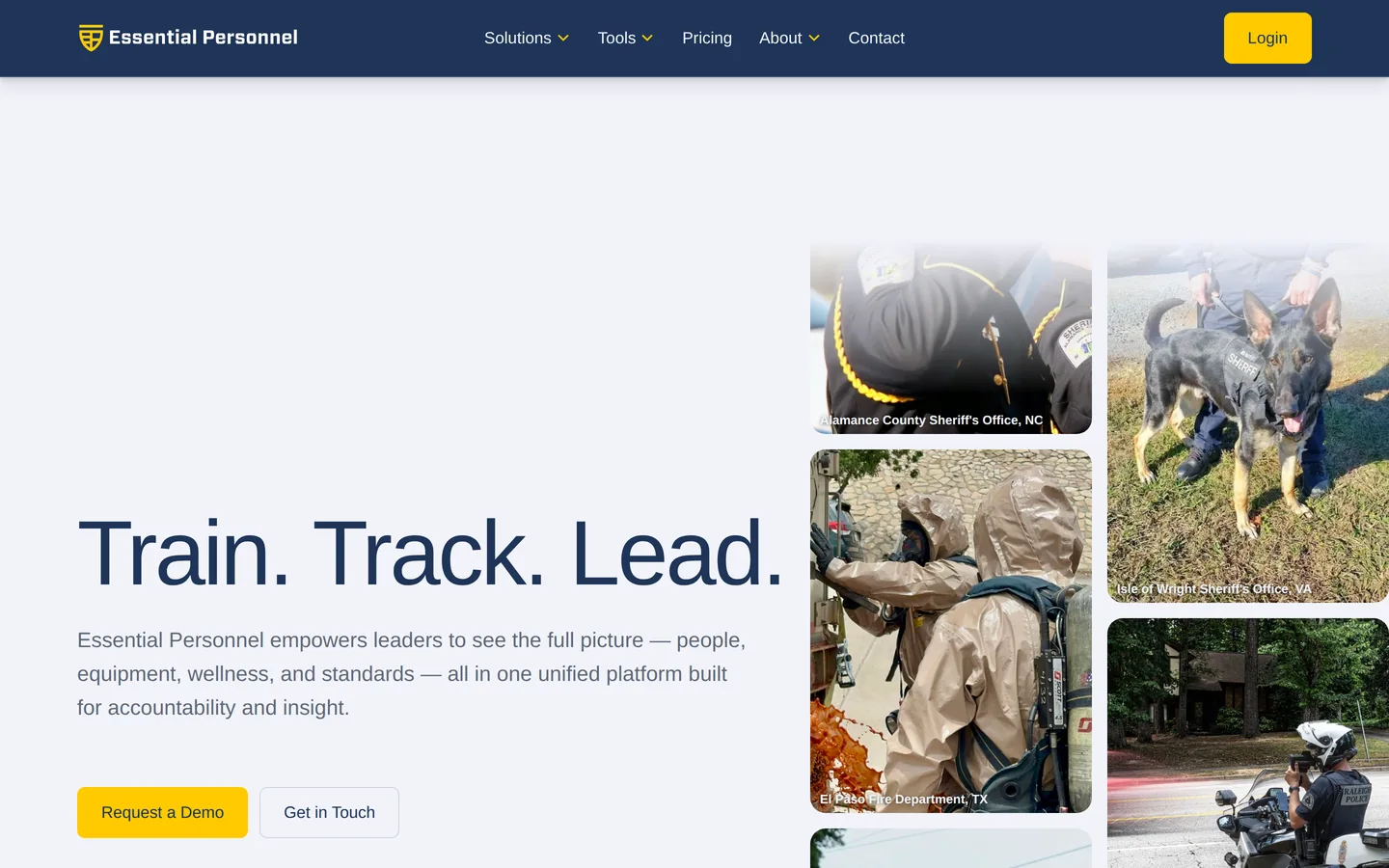
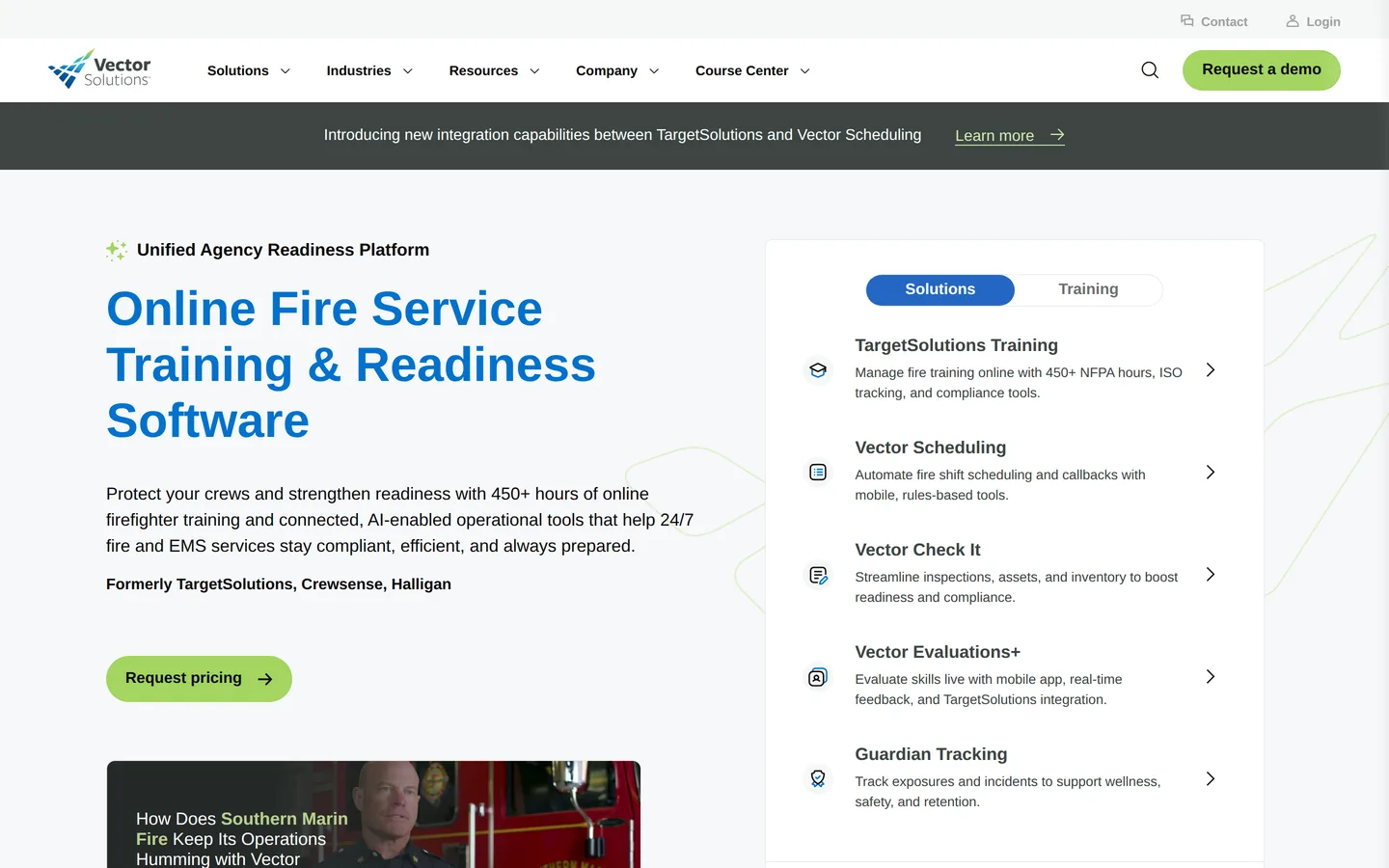
Readiness management software for a fire department proves that every member on a shift is qualified, current and equipped for the seat they're riding. It joins certifications and their expirations, task books and qualifications, training hours, assigned PPE and equipment and, in the broader systems, apparatus checks and staffing. Essential Personnel, Vector Solutions and First Due cover the most of it.
The phrase gets used three ways. Training vendors use it to mean training readiness: members who've completed what they need. Equipment vendors use it to mean the rig and the gear are checked and in service. Records platforms and other fire department software use it to mean the whole department is ready to respond. All three are real, and a department needs all three, but very few products do all three well.
The useful test is the question a battalion chief actually gets asked. If the state, ISO, a lawyer or your own chief asks whether the crew on Engine 2 last Tuesday was qualified and properly equipped, readiness management software should answer it in minutes from records that were kept at the time. If the answer takes a week of pulling spreadsheets from three systems, you have the pieces but not the readiness picture.
What fire department readiness actually covers
Fire department readiness covers three things: people, equipment and staffing. People means certifications, task books, training hours and medical or exposure records. Equipment means apparatus checks, PPE and SCBA, and the gear assigned to each member. Staffing means a qualified member in every seat on every shift. Most fire department software starts from one of the three.
People come first. A rig can be checked again in ten minutes. A lapsed paramedic license, an unfinished driver task book or a firefighter behind on hazmat refresher hours can't be fixed before the next call, which is why this ranking weights the personnel record most heavily.
Equipment is the second leg. Turnout gear carries inspection and retirement requirements under NFPA standards, and SCBA carries flow tests and hydrostatic test dates. Gear that belongs to a person is as much a part of that member's readiness as their certifications.
Staffing ties the two together. A shift is ready when every seat holds someone qualified for it. That check happens in fire department scheduling software, and it's only as good as the qualification data the schedule can see.
Is training readiness the same as fire department training software?
No. Training readiness is the proof that each member's certifications, task books and required hours are current for the seat they hold. Fire department training software usually means a learning management system that delivers courses and records completions. Most departments need both, and the readiness record should collect training from every source, including state classes and outside certifications.
A course library knows what its own courses recorded. It doesn't know about the state Fire Officer class, the hazmat technician certification earned at another department or the live burn your training division ran last month. Training readiness is the sum of all of it, measured against what each position requires.
That's why Essential Personnel scores highest here without delivering a single course. EP's own Fire and EMS page calls it the system of record for training, run alongside the course provider you already use, with providers such as ProdigyEMS, Fire Engineering Training and Vector Solutions feeding completions into the member's Logbook. Our fire department training software guide ranks the course providers themselves, and its training readiness section explains where the two jobs meet.
If you're weighing fire department training software against a readiness record, ask any vendor for a report of every member whose certification lapses in the next 90 days, broken out by station and by position. Then ask whether the report includes certifications the system didn't issue. That one question separates training readiness from course delivery.
Do you need fire apparatus inspection software and fire department inventory software as well?
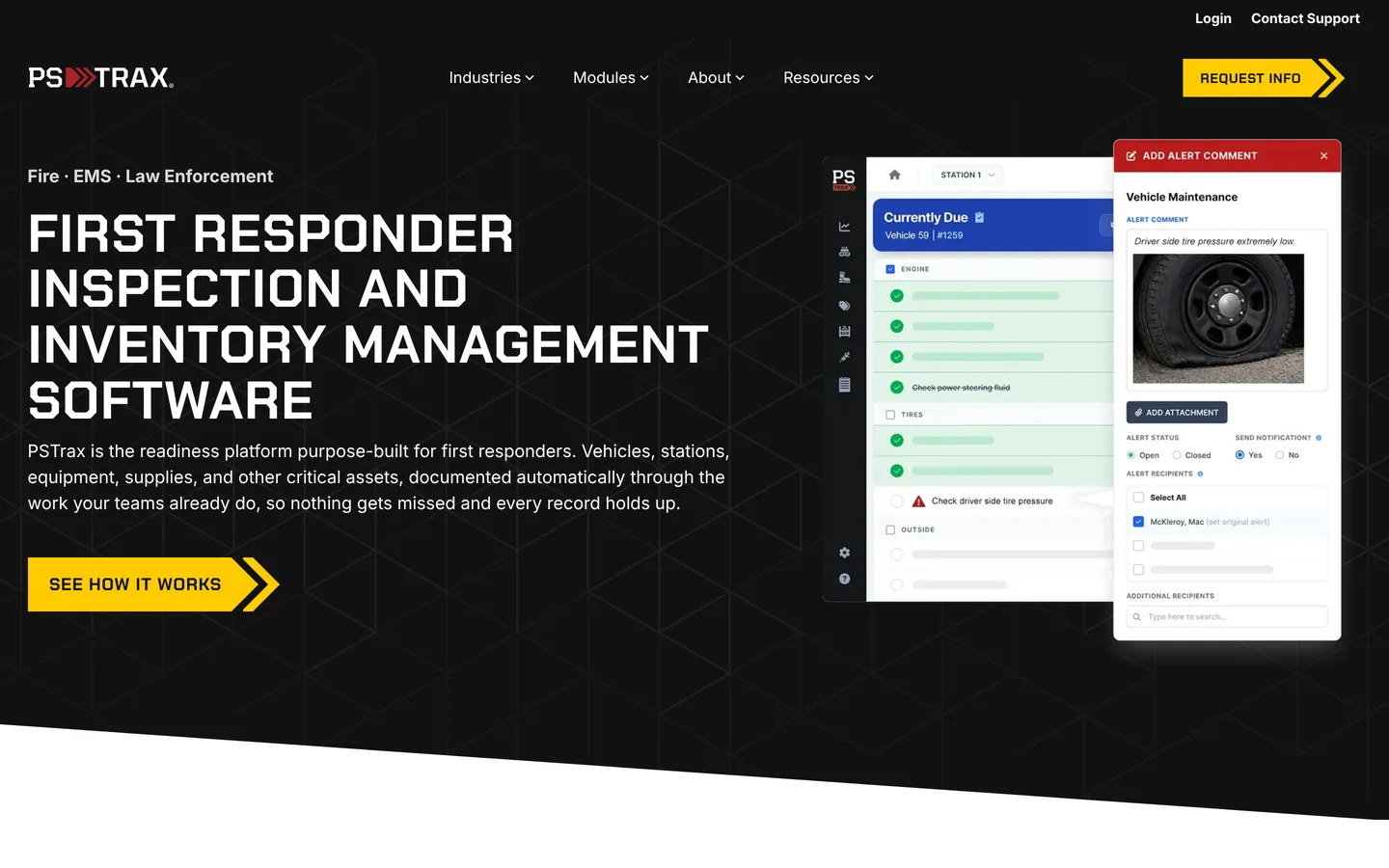
Often, yes. Fire apparatus inspection software and fire department inventory software handle daily truck checks, compartments, consumables and medications better than a personnel system does. A readiness record handles the gear assigned to each member. PSTrax, Vector Check It and First Due's assets module are the strongest station-side fire department checklist software here, and they complement a people-first record.
Fire department checklist software grew out of paper truck check sheets: a crew walks the rig at shift change, flags a low tire or a missing tool and the failed item becomes a work order. PSTrax takes that furthest, with SCBA cylinder rotations, hydrostatic test dates and NFPA 1850 turnout gear lifecycles in one place. Fire department inventory software covers what's used up: medical supplies, controlled substances and stock on each apparatus. First Due and ESO include fire department inventory software in their platforms, and PSTrax and Vector Check It sell it on its own.
Fire department checklist software or a personnel record?
A personnel readiness record asks a different question: whose is it? Essential Personnel's Equipment suite ties every piece of issued gear and every vehicle to the person who carries or drives it, with customizable inspection forms and status from issue through inspection to retirement. When a set of turnouts fails inspection, that's a fact about a firefighter's readiness, not just about a locker.
Use fire department checklist software for the station's daily checks if your crews run them on paper today, and fire department inventory software where you stock medications or supplies on the rigs. Use the personnel record for what belongs to people. If you're shopping for both, ask whether the fire apparatus inspection software can share data with your personnel system, because most can't today.
Where does fire department scheduling software fit into readiness?
Fire department scheduling software decides who is on each seat of each shift. It supports readiness only when it can see current qualifications and flag a member who isn't qualified for the seat. Vector Scheduling validates credentials against position qualifiers, and Aladtec flags expired licenses, so the qualification data behind the schedule decides how much that check is worth.
Scheduling is where readiness becomes visible every day, and also where it fails quietly. A schedule built from a roster with stale certifications puts an unqualified driver on an engine without anyone noticing. The fix is a clean qualification record feeding the schedule, not a second copy of certifications typed into the scheduling tool.
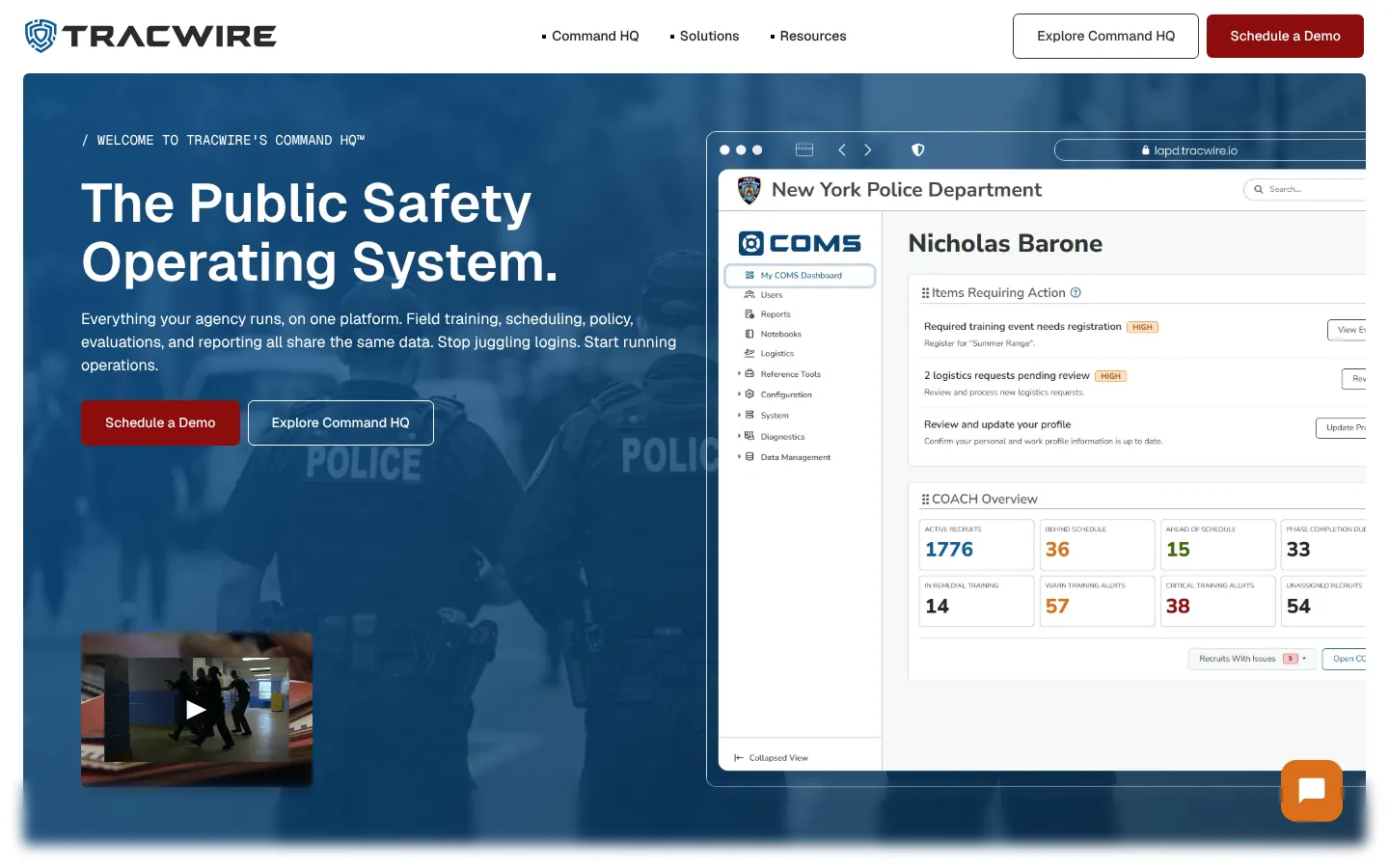
Essential Personnel doesn't build schedules. It holds the qualification record and connects to Aladtec, which monitors minimum staffing and the qualifications behind it. Vector Solutions, First Due, ESO and Command HQ by Tracwire all include fire department scheduling software in their own platforms, which suits a department buying all its fire department software from one vendor.
What readiness management software costs
Most readiness management software is quote only. Essential Personnel publishes $175 per user per year for all four suites, or $85 for Talent Management alone, with a $3,000 one-time start-up fee. D4H publishes from $2,000 per module per year plus a required 25% cloud plan. Public records put Vector Solutions training contracts in five and six figures.
For a 60-member department, Essential Personnel's Talent Management, Equipment and Safety & Wellness suites come to $145 per user, or $8,700 a year, and the full Total Solution is $10,500 a year at published prices. Size-based discounts are available on request. D4H's price list puts Personnel & Training and Equipment Management at $2,000 each for a basic tier covering up to 100 personnel and a single location, so $5,000 a year with the cloud plan.
The rest are quote only, so public records are the best guide. Fresno, California awarded a five-year learning management contract to Vector Solutions in November 2025 not to exceed $164,750. Chattanooga, Tennessee raised its Vector contract, used by the fire department, to $150,000 a year in May 2026 as it expanded citywide. Sanibel Fire and Rescue District in Florida approved $13,190 in 2019 for ESO assets, checklists, scheduling and a fire records bundle across two stations. Edgewater, New Jersey split $9,825 for PowerDMS across four departments, including fire, in 2024.
Whichever you price, ask for the total in writing: every module you'd need for people, equipment and staffing, the setup fee, the renewal increase and whether volunteers and part-time members count as users. Readiness bought as three separate products from one vendor is still three line items, and fire department inventory software or fire apparatus inspection software bought separately adds a fourth.