
How to support your peer support team: a guide for fire and police leaders
Your peer support team does its best work when nobody sees it: a phone call after a bad run, a coffee with someone whose marriage is falling apart, a quiet check on the crew that worked two pediatric deaths in a month. Because the work is invisible, it's easy for leadership to assume the team is fine. Peer support workers burn out, drift away from training, and lose the trust of members when confidentiality slips or a supervisor asks the wrong question. Supporting the team is a leadership job, and it doesn't happen by default.
This guide is for fire chiefs, police chiefs, sheriffs and the wellness coordinators who answer to them. It covers the ten things leadership owes a peer support team: a written policy, a coordinator, careful selection, clinical supervision, training, real confidentiality, fast activation after critical incidents, records of activity but never of content, care for the supporters themselves, and steady funding. It draws on the IAFF's ten steps, the League of Minnesota Cities guidelines, the IACP peer support guidelines and state law, and on departments that track critical incidents in Essential Personnel.
How do I support my peer support team? The short answer
To support your peer support team, put the program in a written policy, name a coordinator with protected time, select members carefully, give the team a licensed clinician for supervision, and train them every quarter. Protect confidentiality and never ask the team to report on members. Alert the team quickly after critical incidents, track only anonymous activity, watch your peer supporters for burnout, and fund and recognize the work.
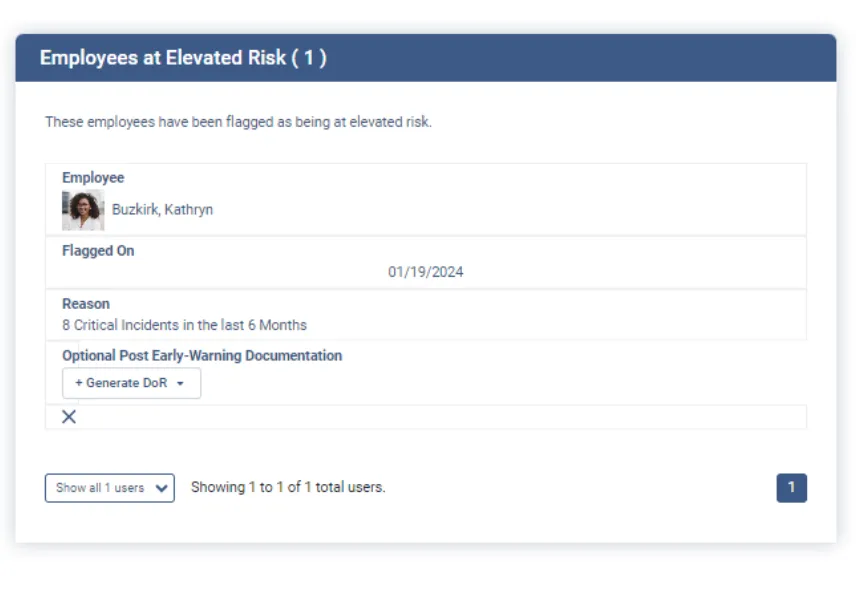
Departments that run critical incident tracking in Essential Personnel let the software do the part that usually fails: it alerts designated peer support team members or an outside clinician when a traumatic call is logged or a member crosses a department-set threshold, keeps that detail away from the chain of command, and keeps the alert, its timing and the follow-up on the incident record, so you can show outreach happened without recording what was said.
Two ideas run through everything below. The first comes from the League of Minnesota Cities guidelines: effective peer support "is peer-driven, while benefiting from the support of command and administrative staff". Leadership supports the team; it doesn't run it. The second is trust. A peer support program only works while members believe what they say stays with the peer, so every decision you make about policy, records and software either builds that trust or spends it.
Why supporting the peer support team is the leader's job
A peer support team is made of volunteers doing emotionally heavy work on top of their regular jobs. Leadership controls what they need to keep doing it: written policy, protected time, a clinician, training budget, confidentiality that holds up, and a reliable way to learn when a critical incident has happened. Without those, a team shrinks to the two or three people everyone calls.
Most published guidance on supporting peer support workers comes from behavioral health, where peer support workers are paid staff with a supervisor, a caseload and a set of core competencies. First responder peer support is different. Your peer supporters are firefighters, officers, deputies, dispatchers and medics who volunteered, often unpaid for the extra hours, and they support coworkers they'll stand beside on the next call. That makes boundaries harder, burnout less visible, and supervision more important, not less.
It also means the usual failure isn't a bad peer supporter. It's a team that nobody told about the fatal crash until a week later, a member who stopped calling because a captain asked the team how he was doing, or a coordinator doing the job on their days off. Each of the ten steps below closes one of those gaps.
1. Put the peer support program in writing
Write a peer support policy or SOP that sets out the team's purpose, who can serve, how members are selected and removed, who supervises the team clinically, the limits of confidentiality, how the team is activated, and what records may be kept. The IACP recommends a written procedures manual available to all personnel, and in some states the legal protection depends on it.
The IACP peer support guidelines, ratified by its Police Psychological Services Section in 2016, recommend that a program "be governed by a written procedures manual that is available to all personnel", and that a steering committee with labor, administration and a licensed mental health professional shape it from the start. The IAFF's ten steps say the same for fire: choose a program model, then write SOPs "that identify basic functions and processes for your peer team operations". The IAFF offers sample SOPs to locals and departments that ask.
The written policy matters legally as well as practically. Colorado's peer support privilege, amended in 2024 by Senate Bill 24-063, covers law enforcement, firefighter and EMS peer support team members, but only when the team member is "officially designated" and "functioning within the written peer support guidelines that are in effect" for the agency. No written guidelines, no privilege. Check what your state requires before you rely on any protection.
Keep the policy where members can read it. A peer support policy that members have never seen does nothing for trust, because the whole point is that they know the rules before they pick up the phone.
2. Name a peer support coordinator and give them time
Appoint one peer support team coordinator who activates the team, makes referrals to clinicians, collects anonymous utilization data, schedules training and runs team meetings. Choose someone trusted, organized and passionate about behavioral health, and give them protected time to do it. The IAFF says the team leader needs "enough free time to dedicate to the job".
Both the IACP and the League of Minnesota Cities describe the same role: a coordinator who "coordinates peer support activation, makes referrals to mental health professionals, collects utilization data, and coordinates training". In a small department that might be a captain or lieutenant with a few hours a week. In a large one it can be a full-time wellness coordinator. What fails is the coordinator who does it all on their own time, because when they burn out the program goes with them.
Give the coordinator a direct line to the chief or sheriff, a budget line, even a small one, and a deputy who can cover vacations and their own bad weeks. Agree in writing what the coordinator reports upward, which is program activity and needs, never names.
3. Select peer supporters carefully, and deselect them fairly
Peer support team members should be volunteers in good standing whom coworkers already trust. Select them through an application and interview that includes current team members and the team's clinician, and look for maturity, judgment, ethics and resolved past trauma. Set criteria for removal, such as a breach of confidentiality, and let members take leave without penalty.
The IAFF suggests a simple way to find the right people: an anonymous poll asking members "who they would confide in after a stressful day on the job or when facing a personal crisis". The names that come back are your candidates. Aim for a team that mirrors the department by age, gender, race, rank, shift and station, and include civilians, dispatchers and retirees where you can. The League of Minnesota Cities treats one peer supporter for every seven staff members as an acceptable standard, while noting it varies with resources.
Plan for the other end too. The IACP and League guidelines both recommend written deselection criteria, such as breach of confidentiality, failure to attend training or loss of good standing, and both recommend that peer supporters can take a leave of absence when their own lives need attention. A peer supporter who can step back without stigma will come back. One who can't will quietly stop answering.
Think hard about supervisors. The IACP prefers that peer supporters not support people in their own chain of command, because supervisors carry duties to report harassment, discrimination and injuries that a peer conversation can trigger. One answer is to keep officers on the team but route them to members outside their command.
4. Give the team a licensed clinician for clinical supervision
Every peer support team needs a licensed mental health clinician who understands fire or police culture. The clinician provides clinical supervision and consultation, helps screen and train peer supporters, reviews the SOP and builds the referral network. The IAFF says peer support teams "should not function without oversight from a trained and licensed mental health clinician".
The clinician is the team's backstop. Peer supporters aren't counselors or therapists, and the IACP is clear that they're trained to recognize when a problem is beyond them and refer it to a licensed professional. That only works if there's someone to refer to, and if peer supporters can call that person when they're unsure. The IACP recommends that consultation be available 24 hours a day, from a clinician trained in police and public safety psychology.
Keep the clinician's role clean. The League of Minnesota Cities guidelines say the clinical director "must avoid any dual relationships and shall not conduct fitness for duty evaluations". A clinician who might one day decide whether a member keeps their job can't also be the person members are told is safe to talk to.
Build the referral network with the clinician: your employee assistance program, behavioral health providers on the department's health plan, culturally competent therapists, treatment centers and crisis lines. The IAFF suggests calling and visiting providers before you list them, and keeping that vetted list current.
5. Train the peer support team, then keep training
Start every peer supporter with a recognized introductory course, such as the IAFF's two-day Peer Support Training for fire, then hold continuing training through the year. The IACP recommends four hours of update training per quarter, covering confidentiality law, role conflict, suicide assessment, crisis intervention, substance use, family issues, burnout and self-care.
The IAFF Peer Support Training is delivered by firefighters, in person and online, and requires its free two-hour Behavioral Health Awareness Course first. Police agencies draw on state and regional first responder peer support training and on critical incident stress management courses for defusings and debriefings. Whatever you use, write down which course counts as qualifying, so every member of the team meets the same standard.
Continuing training is where teams slip. The IACP's 27-topic training list includes "Burn-out" and "Wellness and self-care (for employees and PSPs)", so the training plan looks after the supporters as well as the people they support. Use team meetings to ask what training the team wants next, and track each peer supporter's training the way you'd track any other qualification, so the coordinator can see who's current before assigning someone to a hard call.
6. Protect confidentiality, and be honest about its limits
Confidentiality is what makes members use peer support. Put it in policy, tell supervisors they may not ask the team about anyone, and have every peer supporter sign a confidentiality agreement. Then be honest about the limits: threats of suicide or harm to others, child or vulnerable adult abuse, and whatever else your state law excludes. Members should hear those limits before the conversation starts.
Three terms get mixed up, and the IACP and League guidelines both separate them. Privacy is the member's expectation that what they say stays with the peer. Confidentiality is the peer supporter's ethical duty not to disclose it. Privilege is the legal protection from being forced to disclose it, in court or elsewhere, and only some states grant it to peer support.
- Minnesota protects critical incident stress management communications for emergency service providers, including police, fire, dispatch and EMS, under Minn. Stat. 181.9732, classifies the data as private, and lists five exceptions: preventing harm to self or others, mandated reporting, written consent, a deceased member's spouse or estate consenting, and the member testifying voluntarily.
- Colorado extends privilege to designated law enforcement, firefighter and EMS peer support team members, and defines the protected communication to include any "note, record, report, or document" made during or arising out of the meeting. It doesn't apply when the peer supporter was a witness or party to the incident, or when the information indicates criminal conduct.
- Federal law enforcement peer support is covered by the COPS Counseling Act of 2021, which also requires the peer supporter to tell the member about the exceptions in writing before the first session. It doesn't reach state or local agencies, which depend on state law and their own policy.
The common threads: protection attaches to a designated team member, it ends at threats of harm and mandated reports, and in Minnesota and Colorado it doesn't cover a peer supporter who witnessed the incident. The IACP adds that "the fewer confidentiality restrictions, the more confidence department members will have in the program". Write only the exceptions the law requires.
Then protect the team from your own command staff. Both guidelines say peer supporters shouldn't be asked to give supervisors information obtained through peer support. Say that in the policy, say it at roll call, and back the coordinator the first time a captain asks.
7. Activate the team fast after critical incidents
Agree in advance which incidents automatically activate the peer support team, who notifies the coordinator, and how quickly. Then make sure the team actually hears about them. The most common failure isn't the response; it's that the team learns about a line of duty injury, a pediatric death or an officer-involved shooting days later, by word of mouth.
Write the activation list into the policy, using the definition of a critical incident your department already uses. Our guide to what counts as a critical incident has a master list from published fire department SOGs and a sample SOG for activating the CISM team. The League of Minnesota Cities describes defusings within 8 to 12 hours of the event and debriefings typically 24 to 72 hours after, so a notification that arrives on day four has already missed both.
Make referral easy from three directions: self-referral with as few obstacles as possible, referral by a coworker, and referral by a supervisor who's worried about someone. The League guidelines allow supervisor referral "to initiate a connection request", while warning that peer support must never be used "in lieu of discipline, as part of discipline, coaching or work improvement plan".
Watch the cumulative load as well as the single call. One fatal crash gets noticed. A member's fourth this quarter usually doesn't, because nobody is counting across shifts and stations. Statesville Fire Department in North Carolina found that the same crew had worked two pediatric fatalities within weeks, and changed how its peer support network responded once it could see the pattern. Our guide to tracking critical incidents covers thresholds in detail.
One rule from Minnesota law and the League guidelines is worth copying everywhere: a peer supporter who witnessed the incident shouldn't be the one providing peer support for it. Activation should route to someone who wasn't there, and the witnesses should receive support themselves.
8. Track peer support activity, never content
Peer supporters shouldn't keep notes on individual conversations. Track anonymous statistics only: number of contacts, type of contact, time spent, referrals made and follow-ups. That's enough to show the program is used, justify the budget and spot training needs, without creating a record that can be subpoenaed, requested or used against a member.
The IACP recommends that a peer supporter "not keep written formal or private records of supportive contacts other than anonymous statistical information", and describes a form, paper or electronic, for contacts, time, type of service, referrals and follow-up. The League of Minnesota Cities goes further: information that could identify a member, or even a member's "number of interactions with the peer support program", shouldn't be collected.
The League guidelines also set out what a peer support management system should do: individual information, "especially mental health, must not be stored in the system"; any software must meet security, encryption, user authentication and data storage requirements; and the system should let the organization "manage proactive connections and provide proof of coverage through reporting and anonymous tracking". In other words, the department needs a record that the team reached out, not a record of what anyone said.
That line, between the incident and the conversation, is the one most departments blur. The incident itself, the call, the exposure, the crew on scene, belongs in your operational and wellness records. The conversation that follows belongs to the member. Our guides to officer wellness records and a model wellness records policy show where each record goes.
9. Look after the supporters: supervision, boundaries and burnout
Peer supporters carry their own calls plus the weight of their coworkers' stories, and they're often the last to ask for help. Hold regular team meetings with clinical supervision, give each peer supporter one-on-one check-ins with the coordinator, cap caseloads, require a debriefing for the team after large incidents, and give every member a non-punitive way to step back.
Writing in American Police Beat, a sheriff's office police psychologist put it plainly: "Being emotionally on call is fundamentally different from being tactically on call." The article lists the signs a team leader should watch for in peer supporters: overcommitting to cases, avoiding outreach or follow-ups, isolation from the team, cynicism or irritability, and clear burnout.
What helps, from the IAFF, the IACP and that article:
- Regular team meetings for peer and clinical supervision, sharing what's working, and referral feedback.
- One-on-one check-ins between the coordinator and each peer supporter, so strain shows up early.
- Match, don't rotate. Assign the peer who fits the member and the call, rather than whoever is next on a list. Statesville matches members with a peer who has been through a similar incident.
- Boundaries in writing: no dual relationships, referral when one member is calling too often, and no peer support for someone in your own chain of command.
- A mandatory debriefing for the team after a large-scale event, which the IACP recommends, because the peer supporters were often on that call too.
- Self-care that's real: the IAFF suggests an annual wellness check with the team's clinician or one of the member's choice, and encourages peer supporters to use the resources they recommend.
- A clear, non-punitive opt-out, so a peer supporter who's struggling can pause or leave without explaining why.
10. Fund, measure and recognize the peer support program
Give the team a budget for training, clinician time and outreach, and look for outside funding such as the Justice Department's Law Enforcement Mental Health and Wellness Act grants. Measure the program with anonymous utilization data and an annual member survey, compare it with EAP use, and recognize the team's work formally, since most of the department never sees it.
For police and sheriff's offices, the COPS Office's LEMHWA program funds "peer support, training, family resources, suicide prevention, stress reduction, clinical support", with start-up awards for agencies without a wellness program and enhancement awards for those that have one. The fiscal 2026 round closed on 5 August 2026, so plan for the next one. Fire teams are funded through the department, the local union or a state association, depending on which of the models the IAFF describes they use.
The IAFF's tenth step is to evaluate impact "while preserving confidentiality": an anonymous survey of members on use and satisfaction, utilization figures compared with EAP use, and testimonials from members willing to share them. Report this to command and the governing body each year, alongside the team's training and staffing needs.
Then recognize the team. The American Police Beat article suggests "unit citation awards, peer supporter of the year and internal team recognition", and those fit naturally into a department awards program. Recognize the team as a whole, without describing anyone they helped.
What a leader should never ask of the peer support team
Never ask peer supporters how a specific member is doing, never make peer support part of discipline or a performance plan, never ask them to keep notes on conversations, never have them or their clinician decide fitness for duty, and never send a peer supporter to support a call they were on. Each of these destroys trust faster than any budget cut.
| Don't ask the team to | Why |
|---|---|
| Report on how a member is doing | The IACP and League guidelines both say peer supporters shouldn't give supervisors information from peer support contacts. Ask the coordinator for program numbers instead. |
| Join a disciplinary process | The IACP says the program "is not an alternative to discipline". A peer can support a member under investigation but shouldn't discuss the incident itself. |
| Keep notes on conversations | Notes are records, and records can be requested or subpoenaed. Anonymous statistics are enough. |
| Weigh in on fitness for duty | The team's clinician "shall not conduct fitness for duty evaluations", in the League's words. Use a separate evaluator. |
| Support a call they were on | Minnesota law and Colorado's privilege both exclude witnesses. Send another peer, and support the witness too. |
| Replace the EAP or a clinician | Peer support augments professional services; it doesn't replace them. Peers refer up. |
What peer support records to keep, and where they belong
Keep three kinds of record and keep them apart: the critical incident itself on the member's wellness record, the peer support team's own roster and training on the team record, and anonymous activity statistics for the program. Don't keep any record of what a member said to a peer supporter, and don't put peer support in the personnel file.
| Record | Keep it? | Where | Who sees it |
|---|---|---|---|
| The critical incident (call, date, members on scene, type) | Yes | The member's wellness record, separate from the personnel file | Designated wellness staff, peer support coordinator, clinician |
| The alert that a threshold was crossed | Yes | Wellness record | Designated wellness staff and peer support only |
| That outreach happened, and when | Yes, without content | Wellness record or program log | Coordinator |
| What the member said | No | Nowhere | Nobody |
| Contacts, time, referrals, by type | Yes, anonymous | Program statistics | Command, governing body, grant reports |
| Team roster, training, confidentiality agreements | Yes | Peer support team record | Coordinator, command |
| Peer supporter's own wellness check | Attendance only | With the clinician | The peer supporter |
This is where most peer support teams lose ground. An incident logged in an email, a spreadsheet of who the team called, or a supervisor's note that "peer support talked to him" each turn into a record nobody planned for. Decide where each record lives before the next critical incident, and tell members, because they'll decide whether to use the team based on what they think gets written down.
Supporting a fire department peer support team vs a police peer support team
The ten steps of first responder peer support are the same for fire and police. Fire teams are often organized through the union local or a regional team, include retirees and families, and lean on the IAFF's training and clinician network. Police teams more often sit inside the agency, follow the IACP guidelines, and can apply for federal LEMHWA funding. Both should include dispatchers and civilians.
In the fire service, the IAFF notes that a team can be based in the local union, the department, or a state or provincial association, and the choice affects funding. Its outreach list includes retirees and family members as well as firefighters and chiefs. Station visits and informal check-ins carry more weight than a poster with a phone number.
In law enforcement, internal affairs, Giglio obligations and public records requests make the confidentiality questions sharper. Officer-involved shootings bring an investigation alongside the support, and the IACP recommends cautioning members under investigation that what they share about the incident may not be confidential. Small police departments and sheriff's offices often share a regional team, which the IACP and the League of Minnesota Cities both encourage.
For both, don't forget telecommunicators, civilian staff and volunteers. They hear the same calls, and the League guidelines recommend that teams cover "all divisions, including civilian, sworn, and volunteer".
Peer support and critical incident tracking in Essential Personnel
Essential Personnel doesn't deliver peer support, counseling or critical incident stress management, and it isn't a clinical record. It handles the trigger, the routing and the record: it logs critical incidents against every member, alerts designated peer support team members or an outside clinician, keeps the detail from the chain of command, and tracks the team's roster and training.
The pieces, as they're described on essper.com:
- Incident tracking: injuries, use of force, traumatic calls, motor vehicle accidents and exposures are recorded against each member and build a wellness profile, so the cumulative load is visible.
- Automated Alert Triggers: the department sets what number and type of events, in what timeframe, fire an alert, so the peer support team hears about a member's third traumatic call without anyone having to count.
- Critical Incident Alerts and Specialist Role Permissions: designated people, including peer support team members or a contracted clinician from outside the agency, are notified of a traumatic or critical incident and can see it, while the chain of command doesn't automatically see wellness detail.
- Resource Library: the department publishes its peer support contacts, clinician list, protocols and trusted material from bodies such as the IAFF and IACP where members can find them.
- Special Teams and Committees, Certifications and Logbook: the peer support team is set up as a team with its members and assignments, and each peer supporter's training and qualifications are tracked so the coordinator knows who's current.
Statesville Fire Department had a strong peer support network but no formal way to track critical incidents; details traveled by word of mouth. After moving critical incident tracking into Essential Personnel, threshold alerts showed that the same crew had worked two pediatric fatalities within weeks. The department now matches affected members with a peer who has been through a similar call, has contracted with clinicians for additional support, and had its critical incident tracking cited as a best practice during its CFAI reaccreditation. The full account is in the Statesville story.
"It changes how the department and our peer support network responds, knowing that you have a cascading event like that."
Kyle Bell, Deputy Chief, Statesville Fire Department, North CarolinaSafety and Wellness is published at $40 per user per year, or $175 per user for all four suites, plus a one-time $3,000 startup fee, on the pricing page. Special Teams and Committees and training records sit in the Talent Management suite. The platform is hosted in AWS GovCloud, aligned with the FBI CJIS Security Policy and covered by an annual SOC 2 Type II report, and it's available through GSA Advantage, NASPO, Omnia Partners, NCSA and VSA.
Make sure your peer support team hears about every critical incident
Bring your activation list and your confidentiality policy, and we'll show you how alerts and permissions work for a department your size. Call (910) 390-0011 or email info@essper.com.
Frequently asked questions
Write a peer support policy, name a coordinator with protected time, give the team a licensed clinician and quarterly training, and protect confidentiality. Alert the team quickly after critical incidents, track only anonymous activity, watch peer supporters for burnout and let them step back. Essential Personnel alerts designated peer supporters when critical incidents are logged and keeps the detail from the chain of command.
The IAFF's ten steps are: obtain buy-in, identify a team leader, recruit the team, develop the team and its SOPs, identify a behavioral health clinician for oversight, train the team, develop a referral network, conduct regular outreach, maintain the team, and evaluate its impact while preserving confidentiality. The team runs the steps, but most of them need the chief's backing.
They should be under department policy, but legal protection depends on your state. Minnesota protects critical incident stress management communications and Colorado protects peer support communications for police, fire and EMS, with exceptions for threats of harm, abuse reporting and, in Colorado, criminal conduct. Federal law covers only federal law enforcement. Tell members the exceptions before every conversation, and write only those the law requires.
Only anonymous statistics: number of contacts, type of contact, time spent, referrals and follow-ups. The IACP recommends peer supporters keep no written records of individual contacts, and the League of Minnesota Cities says mental health information must not be stored. Record the critical incident and that outreach happened on the wellness record, never what was said.
Hold regular team meetings with clinical supervision, give each peer supporter one-on-one check-ins with the coordinator, match peers to calls instead of rotating, and refer members who call one peer too often. Require a team debriefing after large incidents, offer an annual wellness check, and give every peer supporter a non-punitive way to pause or leave the team.
The League of Minnesota Cities treats one peer supporter for every seven staff members as an acceptable standard, adjusted for resources. More important than the ratio is coverage: peer supporters on every shift, station and division, sworn and civilian, across ranks and ages. Small departments often share a regional team, which the IACP encourages for training and critical incidents.
Yes, with care. Supervisors must report some issues, such as harassment, discrimination and workplace injury, that a peer conversation can raise. The IACP prefers that peer supporters not support people in their own chain of command, so you can keep officers on the team but route them to members outside their command, and refer members to a peer of similar rank.
Look for software that records critical incidents against each member, alerts designated peer supporters, limits who sees wellness detail and stores no conversation content. Essential Personnel does this for fire, police and EMS in its Safety and Wellness suite, at $40 per user per year, and tracks the team's roster and training. Statesville Fire Department uses it this way.

About this article
Written by Scott Monroe, Chief Executive Officer & Co-Founder, Essential Personnel. Published 30 October 2026.
Essential Personnel makes the software described here, and the product screenshot is from the platform. Pricing, hosting and purchasing details are taken from essper.com, and the Statesville account and quote are reproduced from the Statesville Fire Department story on essper.com. Program guidance is taken from the IAFF's 10 steps to build your peer support program, the League of Minnesota Cities Guidelines for Practice of Peer Support, the IACP Peer Support Guidelines and American Police Beat; legal points from Minn. Stat. 181.9732, Colorado Senate Bill 24-063 and Public Law 117-60, all checked in October 2026. This article is general information and isn't legal advice.
